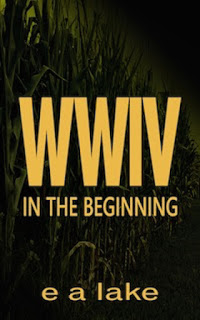
WWIV Book 1

FOUR WWIV Books are now available on Amazon.
Click here for more information.
Showing posts with label post-apocalyptic. Show all posts

Wednesday, March 4, 2020

You too can survive the apocalypse...

Here something, thanks to Hillary Dixler, that may help many people survive TEOTWAWKI!
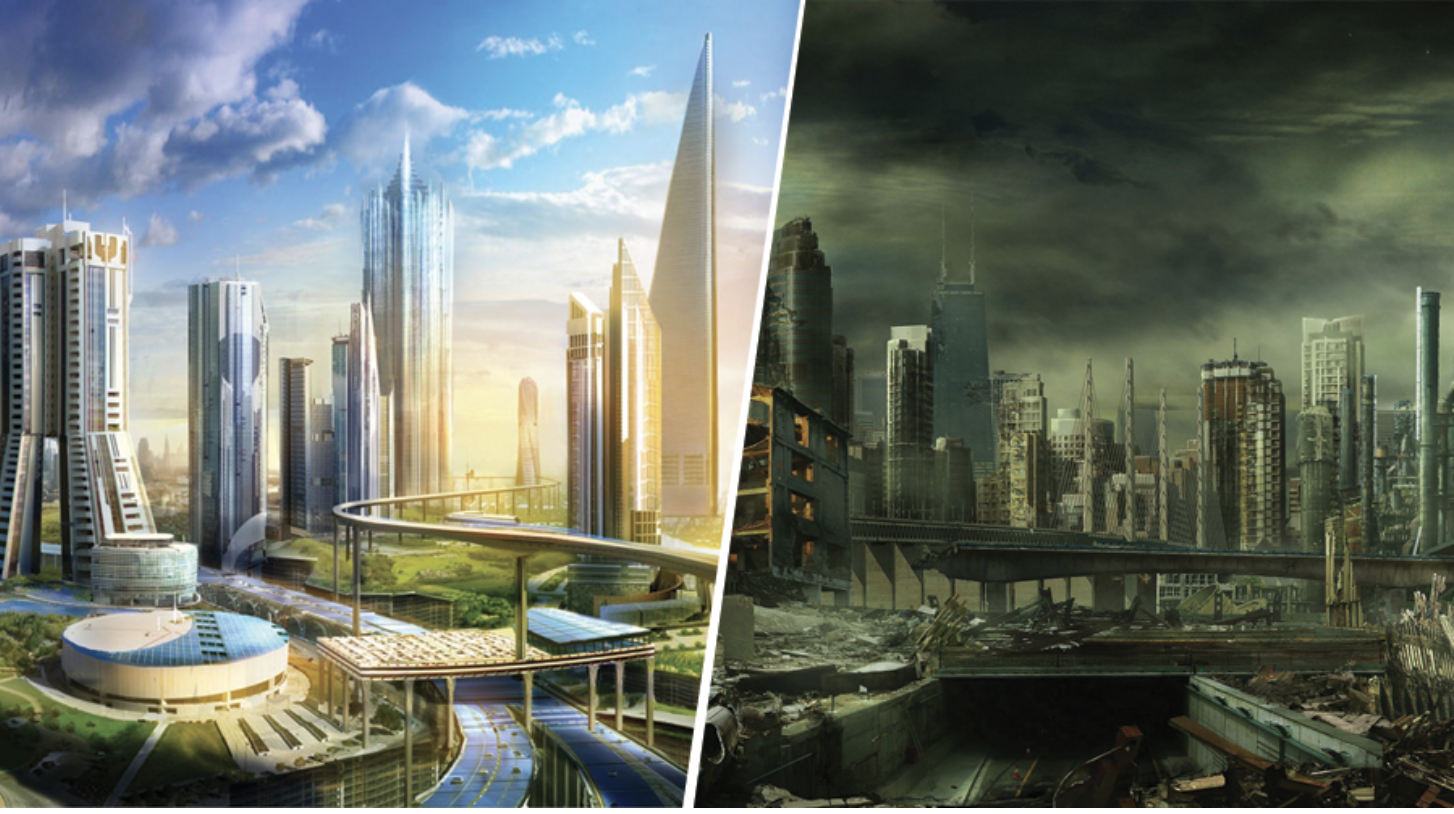


Survive the Apocalypse in Five Easy Steps
Eater combed through FEMA, CDC, and prepper blog survival intel so you don't have to. Now get packing:
1. Stock Up on Clean Water
It's hard to overstate just how important access to clean drinking water will be to your post-apocalyptic survival chances — and you'll need about a gallon per person per day, which is a lot. Have water at your home or wherever you plan to hunker down. Have water in your vehicle. Study up on where to find safe water (drained water from an undamaged water heater = safe, water from the toilet's bowl and flush tank = unsafe). Do some practice rounds of boiling and oxygenating water.
2. Create a Pantry
Canned and freeze-dried foods are your new favorites. So are properly-stored whole wheat cereals, nuts, dry pasta, corn, and various other dry edibles. To further build out your pantry, focus on high-energy options like peanut butter, jelly, granola bars, and trail mix. Get some powdered milk, powdered potatoes, and other powdered foods onto the shelf. Whenever possible, stock up on foods that are low in salt, so as to avoid getting unnecessarily thirsty and wasting your precious water. And stock up on canning supplies so that when you encounter fresh fruits and vegetables, you can make them last.
3. Don't Forget a Manual Can Opener
You might even want to stock a few of these because, let's face it, canned food is now a major part of your life. Do not lose them, or entrust them to someone you think might lose them.
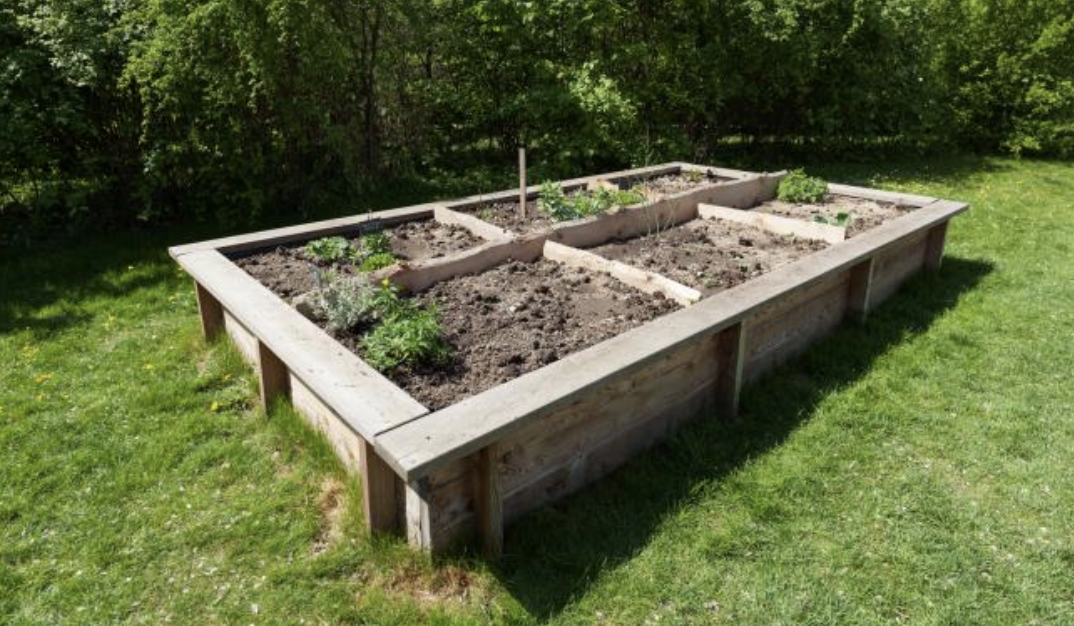
4. Break Out the OverallsSomeday, your stockpile will run out, so get farming. Plant a diverse survival vegetable garden, and make it as huge as possible. Do be warned your vegetables might be an attractive nuisance, so consider camouflaging it as a "food forest." Raise chickens. Chickens are pretty easy to take care of and will provide you with a valuable source of protein via eggs. Also, raise rabbits if you are down to do butchering and slaughtering.
5. Quit Stalling
If you really want to survive, start working on your game plan before the world goes totally to shit. Things like tilling a garden, stocking up on food, and learning how to properly can all take time to get right. Might as well get a head start while the power grid still works. Good luck.
— Hillary Dixler


To me, number five is really important. Many, many people I meet say they know they should be even the slightest bit prepared, but then admit they've done nothing. Even in today's climate.


Stay prepared friends,

e a lake


Friday, February 28, 2020

What Will You Eat When the World Ends?

This post and the next three to follow are taken from an article I found online with the same name as the "Subject Line". They were written by Tove Danovich and posted on 9/16/15. The entire original post can be found here: http://bit.ly/2T8oqu0


-------------------------------------------------------------------------------------------------------------


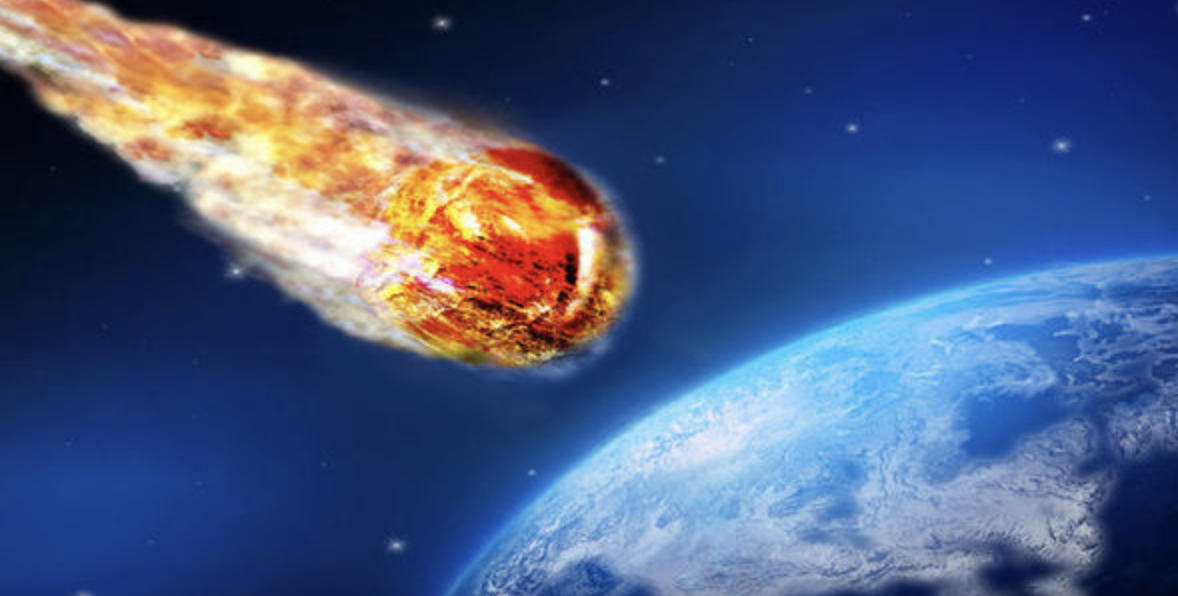
It could happen at any time. Maybe an asteroid will hurtle toward Earth or a storm will cover the world in ice. A bite from a particularly angry monkey could start a viral zombie plague. The Internet could even shut off. Things could go to hell because of monsters or uncomfortably sentient robots, nuclear war or a terrorist attack. The question you should ask yourself is: What will you eat and drink when the world ends?


The people answering this question aren't scientists, the military, or NASA (though maybe there's a secret apocalypse science division in the government). They're known as "preppers" and are usually everyday folks with normal jobs — teachers or bankers or candlestick makers. The only difference between you and them is that they want to be ready when, in prepper jargon, SHTF because it's TEOTWAWKI ("the end of the world as we know it"). While FEMA's guide advocates for having a disaster kit consisting of a 72-hour supply of food, water, and clothing packed and ready to go, that's just a baby step for preppers. Come back when you've stored up enough to last you a week, a month, or a year.

"Hurricane Katrina proved to a lot of people that everything you have can be wiped out very quickly," says Pat Henry, founding editor of the Prepper Journal. He explains that everyone has to focus on four categories of survival — food, water, security, and shelter. Since 2008, Henry has been slowly stockpiling backup supplies. He's used rain barrels, water filtration, and bottled water to amass "hundreds of gallons" of H2O. "It sounds hokey, but I had a gut feeling that I needed to take steps to protect my family," he says. While one Daily Mail UK article estimates "there are three million preppers in the U.S. alone," no one knows who estimated that number, and it's unlikely that there are actually solid statistics on the subject — thanks to an inherent secrecy within the prepper community.

But despite prepping's mysterious exterior, everyone seems to agree on the basic principles of planning, buying, and storing food, water, and cooking utensils one needs to survive a disaster. According to the experts, there are three rules that will help you prepare for the end of the world.


Until next time,

e a lake

Rule One: Keep Your Groceries Hidden

This post and the other in this series are taken from an article I found online with the same name as the "Subject Line". They were written by Tove Danovich and posted on 9/16/15. The entire original post can be found here: http://bit.ly/2T8oqu0

----------------------------------------------------------------------------------------------------

Though preppers are very active behind screen names on the Internet — on groups like the American Preppers Network or websites like the Survival Blog — they stay under the radar in real life. It's not because they think their hobby is strange, but because when the end of the world comes, they don't want the entire starving neighborhood to know that their house is the one full of potable water, heat, and enough food to last a full calendar year. "The first rule of prep club is you don't talk about prep club," says Lisa Bedford, a mother of two teenagers and a prepper also known as the Survival Mom. As a result, there's not much in the way of hands-on education. "The community is online because people want to be very careful and cautious about who they talk to," Bedford explains. Bedford says that she has cultivated a small group of neighboring preppers who she could rely on if SHTF ("shit hits the fan," naturally). "But I have no idea how much they actually have."


Overall it seems like the secrecy is directed toward non-preppers: No one wants to get themselves into an ant-and-grasshopper situation where they're sharing supplies with the non-prepared deadweights of the neighborhood. Within the prepper community, however, there are websites like Prepper Dating and Survivalist Singles (just because it's the end of the world doesn't mean you have to be alone). Other forums facilitate people who want to either connect with neighbors or actually gather enough strangers to fill a home with like-minded survivalists.

Survivalists come in all shapes and sizes. Like any subculture, the people involved fit somewhere on a spectrum of intensity. On the one hand, you might have someone like Bedford, who began prepping as a backup plan if her family lost their primary source of income. On the other end are the types of people who build underground bunkers and whose security plans look like a mini National Guard.

But while outsiders familiar with prepping have a tendency to think survivalists have a streak of insanity, it's actually not all that different from the practice of homesteading. "They call it something different and do it a different way, but the end goal is the same," says Henry. He specifically references the local food movement where many people have taken to knowing their farmer or growing their own produce because they don't feel like they can rely on the government, big food corporations, or other overseers to adequately check the quality of what they're eating. "A large part of both movements is the concept of control," Bedford says. This is one reason why interest in prepping seems to increase after natural disasters, economic crises, or another traumatic event. It allows people to feel like, at least next time, they'll be prepared.


Until we meet again,

e a lake

Rule Two: Don't Store What You Can't Eat

This post and the other in this series are taken from an article I found online with the same name as the "Subject Line". They were written by Tove Danovich and posted on 9/16/15. The entire original post can be found here: http://bit.ly/2T8oqu0

----------------------------------------------------------------------------------------------------

Though tents and bunkers might suffice for backup shelter, storing food and water is a much more involved process. It's not quite as easy as running to the local grocery store the day before a storm and buying up all of the bread and kale left on the shelves. People who are getting into prepping often treat food and water storage as the true first step. While water can be stocked in the form of water bottles or rainwater-capture systems, food is not as easy as following a pre-made grocery list off the Internet.


When Bedford began preparing for the possibility of economic disaster in 2008, she quickly fell on food storage as a place to focus. She says that a lot of people do their own food storage — particularly homesteaders or people who live so far from the grocery store that it's inconvenient to go more than once a month — but that as a "typical suburban stay-at-home mom" she initially felt out of her depth. "It was a whole new world," she says.

The main issue is that stored food is only as useful as your willingness to eat it. "Food fatigue is a real thing," Bedford explains. If all that's in the pantry is rice and beans, the monotony of the diet would eventually make anyone lose their desire to eat.

To get a varied diet, Bedford advocates a three-layer approach to stocking the pantry. The first layer takes place at the grocery store — specifically in the canned food aisles. "The reason canned food is so important is that its shelf stable," Bedford says. That said, don't just purchase whatever is on sale. "Focus on things you'll eat and your family members will eat," she adds. And don't forget the spices: Adding new flavors to the same base ingredients is an easy way to combat food fatigue while sticking to a few pantry staples.


Next are the bulk foods which Bedford believes are where most of a prepper's time and money should be spent. Opening a can of ravioli might get you a meal, but there's not much in the way of choice. With freeze-dried meat, shrimp, yogurt, and cheese (almost every food seems to have been freeze-dried) and a healthy stockpile of various pastas, dried beans, and grain, "you can make hundreds of recipes," according to Bedford. For people who don't feel up to DIY recipe development, there are a number of resources to turn to. Many preppers blog and post individual recipes and tips on their websites. 

Prepping is also a (small) cookbook genre with titles like The Survivalist Cookbook or The Prepper's Cookbook that speak directly to their intended audience. Plenty of other cookbooks focus on things like canned soup, jerky, or campfire recipes.

Finally, a good prepper wants to invest in some ready-to-eat meals. They're not all that different from the field rations given to soldiers and, as a result, are not something the average person wants to survive on entirely. "You'll get tired of them pretty quickly," Bedford says. She recommends that the RTE meals comprise no more than 20 percent of total food supplies.

But it's important to remember that even long-lasting foods can go bad. Henry doesn't just stock a pantry and forget about it, but rotates through the food during normal, non-emergency meals. "You don't want to find out when the power's out and the grocery store is closed that all your food expired five years ago," he says. "That's another reason why buying things you eat all the time is important." It also would ease the culinary transition into end-of-the-world dining if the family is still eating mom's beef stroganoff but with freeze-dried beef, powdered sour cream, and dehydrated mushrooms.


Bedford stresses that food storage does not have a one-size-fits-all approach. A city dweller simply doesn't have room to store a year's worth of food and water. Others can't afford to buy extra bulk and freeze-dried food — much less expensive gadgets or survival cooking gear. Even if someone could have a flock of goats and chickens doesn't mean they can take on that responsibility. "Not everyone can live that lifestyle and a lot of them don't want to," Bedford says.


One more to go friends,

e a lake
Rule Three: Get Out of the Pantry

This post and the other in this series are taken from an article I found online with the same name as the "Subject Line". They were written by Tove Danovich and posted on 9/16/15. The entire original post can be found here: http://bit.ly/2T8oqu0

----------------------------------------------------------------------------------------------------

Unfortunately, even the best-stocked food supply doesn't last forever. Bedford points out that food storage doesn't exist in a vacuum. "You'll open that can of beans and then what?" she says. "The purpose of stored food is to buy you time." In her family's case, the year or so their supply could carry them for would be enough time to connect with other families, work together, barter, and so on. "Right now if there was a massive power grid failure, millions of households would only have a couple weeks of food," she explains. "They have no margin."


Henry supports the idea of keeping chickens both for meat and eggs as well as investing in the time to learn about technology like aquaponics or even hydroponics, which can both create comparatively large amounts of food in small spaces. Surprisingly, he doesn't advocate relying too much on hunting. "If you're out there looking for food and things are that bad, chances are hundreds and thousands of other people are doing the same thing." There are only so many deer and pheasants to go around. That's why in the process of increasing their food supplies, many preppers also teach themselves how they could grow more.

Prepping is just as much about creating a sustainable source of food as squirreling it away. Because the end of the world doesn't just last a week or month or even a year — it's forever. And we all have to eat to survive.


Hope you enjoyed the series,

e a lake


Tuesday, February 20, 2018

Have you heard??? I'm at it again!

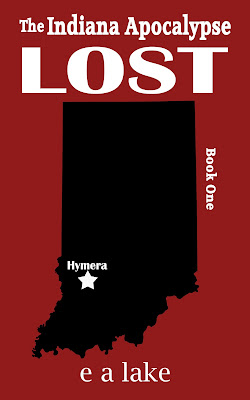
I'll make this short and sweet; I've written another series. And while only two of the three books have been released at this point, I wanted to fill you in on this one.

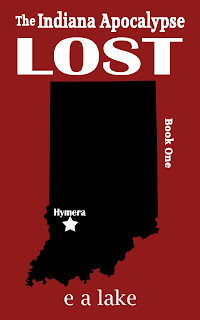
It's called "The Indiana Apocalypse" and it takes place in... you guessed it, Indiana (the southern part to be precise).

But that's not the best part. No, the best part is the angle I've approached this one from.

Here's part of the hook:

What could be worse than coming to with no memory of your past?

Quinn Reynolds regains consciousness on a couch surrounded by four strange women. He wonders where he is, what he's doing, and most importantly who he is. When he finds out the world is in its sixth year of darkness, his mind is totally blown.


Here's the cover for the first book:


It's available on Amazon right now. You can get your copy by either clicking right here or by clicking on the picture above. Your choice! And remember, if you're a Kindle Unlimited reader you can get it for FREE!

I hope you enjoy the story and if you do I hope you'll consider purchasing Book Two Found.


That's all for this time. Until March, have fun and thanks for reading!


e a lake


Tuesday, September 19, 2017

WWIV - The Last Great War

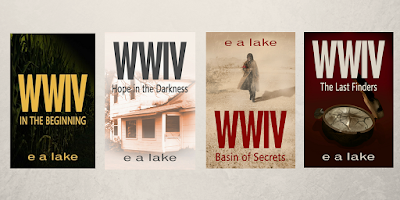
The first novel I ever published was WWIV - In The Beginning. That was more than three years and 120 reviews ago. Since then I've added three more novels to the series:

WWIV - Hope in the Darkness

WWIV - Basiin of Secrets

WWIV - The Last Finders

Here are the covers for all of them (just in case you've never read the series).


Each book is a standalone novel. New characters and new surroundings are found throughout. In the Beginning starts in St. Paul, MN and works its way into western Wisconsin. Hope in the Darkness takes place just outside of Portage (WI). Basin of Secrets is set in Salt Lake City. And The Last Finders is near Eau Claire (WI).

Book one features Bill and Brit. Book two focuses on Hunter and Sister Thersa. Book three zeros in on Cara, Betsy and a man named Willem Tarlisch (my favorite antagonist to date). Book four deals with four friends (Wilson, Tiny, Judy, and Sharon). It also has a great antagonist that goes by the name of Captain Wayne.

So, WWIV is a series but not a serial. I know that some readers prefer it that way. If you haven't dipped your toe into the WWIV water, maybe now is a good time to start. They are all available on Amazon and Book One is always free.


Until next time - Read Like There's No Tomorrow (because if WWIV does come, there won't be one).


e a lake


Thursday, September 7, 2017

The No Where Apocalypse

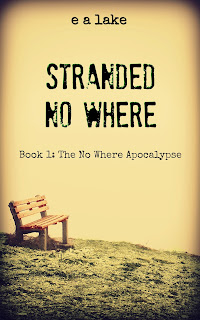
Alone and drunk, Bob Reiniger awakens in a remote cabin in northern Michigan. He's on a break from his stressful life and job. A week of drinking, followed by another week of sobering up, is just what he needs. At least that's his plan.

Little does he know that he'll never again return to his life and his young wife in Joilett, IL. The end of the world as we know it has arrived while he slept.  And it traps him in the absolute center of NO WHERE!

With limited supplies and zero knowledge of how to survive on his own, Bob is forced to seek help from others. Even if that means meeting a strange cast of northern characters that each lives miles away from his grandfather's musty old cabin. Miles that must be traveled on foot. Back and forth, back and forth, back and forth.

Wolves, road bandits, and weather become his new adversaries. Even getting water from his well with a hand pump proves difficult. He worries that winter will kill him. If he only knew that several men would try to end his life before that, his worries could have been saved.

Come meet Bob. Come meet his neighbors: Dizzy, Lettie, Frank, Marge, Nate, and Violet. New people will enter his life. Some will be good and kind: Daisy, Libbie, Jean, Thaddeus Wilson and his sons. Others will be the scum of the Earth, looking to take all that is his.

In the end, Bob must either survive and protect his possessions and his friends, or give in and go the way of the former world!


If you are seeking a character driven, post-apocalyptic series for your fall reading -- these are the books for you. With over 300 four and five star ratings many have enjoyed Bob's tales. 

And, if you are a member of Kindle Unlimited you can read them all for free.

Check out book one of The No Where Apocalypse today.


Thank you for being a reader,

e a lake


Saturday, August 26, 2017

Cover Reveal - Coming in October 2017

It's been a while since my last release. So I'm happy to have a new post-apocalyptic series coming this fall. Here is the cover of book one:


I believe I've put on interesting spin on the apocalypse for you. To read more about this upcoming novel click here for a brief synopsis.

I promise to keep you updated as I get closer to publication.


Have a great week now,

e a lake


Thursday, August 10, 2017

Catching up again!

I know, I know...it's been a while.

Sorry; I've been busy creating new novels and new ideas to be released in the next twelve months. I think you're going to like them. So stay tuned!

Here's what you might have missed while I've been on hiatus:

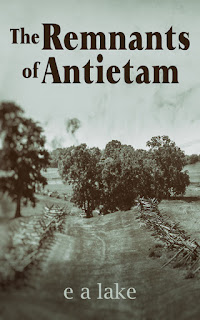
My latest release (from about a month ago) was The Remnants of Antietam. It's post-apocalyptic and involves a little more fighting and weaponry than my usual stuff, but follows much of the same vein you've grown to like.

Set in Sharpsburg, MD (near the Antietam Battlefield) a small community of preppers finds themselves thrown into the world they thought they were ready for. But is anyone ever truly prepared for the end of times?

You can get it by clicking on the picture/cover below:


Also, if you were following the online novel Glitched, it's available in ebook and paperback as well now:


I'll have more to tell you in a few days. I'll catch you up to speed on what I'm writing and an exciting series that will be released in 2018.


Until then, have a great week.


Thanks for reading,

e a lake


Sunday, March 26, 2017

New Release Announcement


I enjoyed writing this novel, though at times I became somewhat depressed with the situations I put the characters through. In the end, I think it's a good post-apocalyptic tale of survival that the reader will enjoy.

So sit back and let me introduce you to Abigail Turner (our main character), Sunshine Jones (Abby's best - and perhaps only - friend), Rickard Hulton (a nearby wealthy rancher who oversees the area), and Jeremy Lasky (Hulton's right-hand man, who is certainly no friend of Abby's).

The apocalypse has been 22 years in the making. Each year has become more and more difficult. The only question that remains is will Abby survive to see a 23rd?


Now available on Amazon. Get your copy today.


Thanks for reading,

e a lake


Tuesday, October 18, 2016

A good thing about the Apocalypse

Well, there's actually a couple of good things.


No Elections to Fret Over

Not sure about you, but I'm sick of political ads, pointless debates, and general mudslinging. I sure won't miss any of those if the EOTWAWKI comes in my lifetime.

Organic is the Only Way

My wife is gluten and lactose intolerant. She is also allergic to carrots, celery, tree nuts, and an assortment of other things.

To combat this she likes to eat as natural as possible. And I get to eat as natural as possible as well (oh goody)!


I am so sick of companies claiming their food is all organic or natural. You want natural? Kill it, grow it or produce it yourself. That way you know for sure where your food is coming from.

So, maybe my type 2 diabetes will disappear when the end comes. Or maybe not. My wife says the jury is still out on that.


In my current series, The No Where Apocalypse, a regular old guy from the Chicago area (one that's never grown a thing in his life...except a beard) finds himself stranded in Northern Michigan when the lights go out. Now he'll have to grow, kill and produce if he wants to stay alive.

Check it out by clicking on the picture below. One Amazon reviewer said it is 'well written and depressing.' I'm pretty sure he meant the depressing part as a compliment.


Until next time, have a great fall (all of you in the northern hemisphere).

e a lake


Did you know this ebook is always free!? And in various formats? Click it to find out more.


Wednesday, September 14, 2016

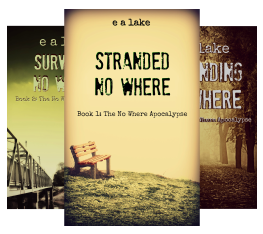
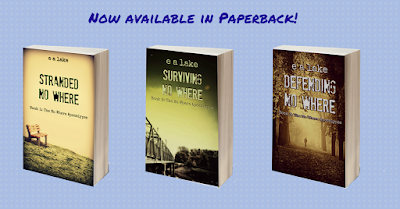
Now In Paperback


Because some people have asked, I'd like to bring to your attention that the above books are available in paperback. 

There will be one more book in this series -- Searching No Where. That one will be available in paperback, and ebook, in late November (2016).

To purchase any of these books in paperback, click on the picture above. To get them in ebook just click on the title below.

If you would like to receive a signed paperback (and I still feel funny offering these, but they are requested) click here. Tell me who you are, what your email address is, and in the "Message" field let me know you'd like a signed paperback. We'll make arrangements to get you one. If you live in the continental US they will cost you $15 each (including postage and handling). If you live elsewhere, I will have to figure out the postage before I can give you a firm price.

As always, thanks for reading. Your support is the most important thing to me. Without you, I simply don't exist!

Ebooks:

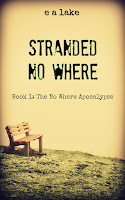
Stranded No Where
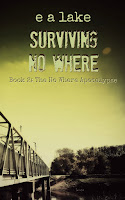
Surviving No Where
Defending No Where


Until next time,

e a lake


And did you know this ebook is always free!? And in various formats? Click it to find out more.


Wednesday, July 27, 2016

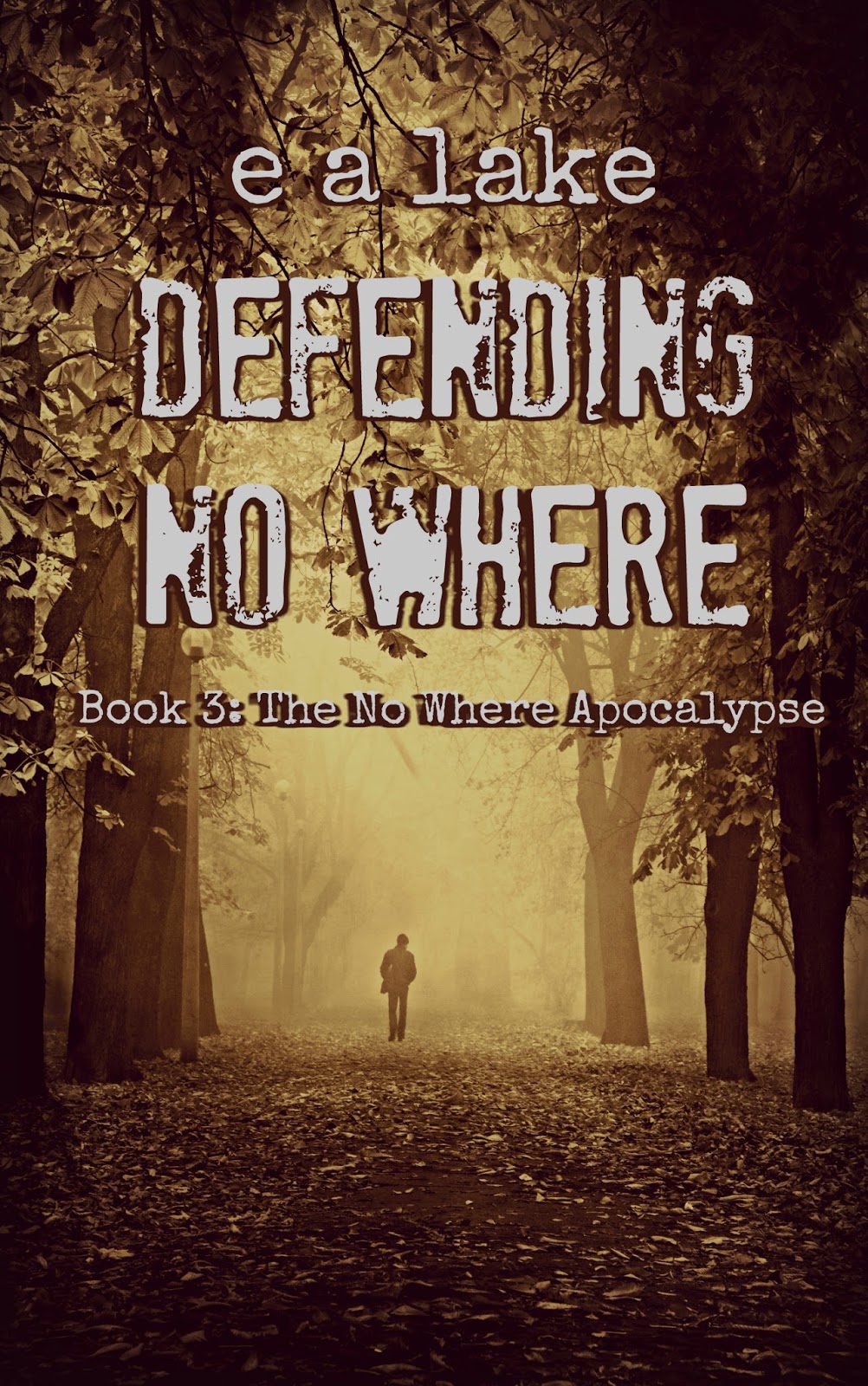
Book 3 Cover Reveal

Thanks for your patience, everyone. 

I'm about ten days (maybe a little more) late in getting this out. But here's the thing: I wanted this just right for all of you. And I believe that between myself and my fantastic cover creator (Katie Mettner, in case you're wondering) we've nailed this one.

First, some good news! Because of your interest and readership, Books one and two (Stranded No Where and Surviving No Where) have reached Amazon BestSeller status. Each book has spent time in the top ten of both the Post-Apocalyptic and Dystopian lists.

So, a huge THANK YOU to all of you for making this series (The No Where Apocalypse) a success.

Without further ado...the book 3 (Defending No Where) cover:


To read more about this upcoming release, go to my website by clicking here.

If you need to start the series yet, you can get the first book here at Amazon.


As always, thanks for reading and following,

e a lake

Thursday, June 30, 2016

Just in time for the 4th of July

Now available on Amazon!

Whew! I wanted this out before the holiday (here in the States), and I made it. 


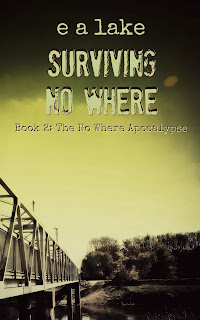
Book 2 of The No Where Apocalypse (Surviving No Where) is ready for your enjoyment. Pick up with Bob, and Lettie, and Dizzy and all the others as they continue to struggle to survive in a world without any of the luxuries that most of us are used to: Electricity, communications, transportation...hope.

Click the cover below to continue the adventure:


If you missed Book 1 (Stranded No Where), here's the link for that as well:


Coming in mid-August will be Book 3 of the saga: Defending No Where. Watch for that later this summer.

As always, thanks for reading my creations. Without you, I am nothing.


Until next time, Enjoy the Holiday,


e a lake

Thursday, June 2, 2016

Imagining No Where

What if? What if? That's the question.

Each summer I like to sneak up to our family cottage for a long weekend all by myself. No one but me and the dogs, a fishing boat, and my computer. Four days of downtime that allows me to recharge my internal batteries and sometimes come up with some great story ideas.

The same happens each falls when I sneak away to the family farm for a few days alone of bowhunting. I love being at one with nature: the chirping fluttering birds, squirrels chasing through the woods, sunshine on my face, and even the occasional drip of rain or two.


What if...

The Darkness arrived when I was on one of my trips? What if I awoke to no electricity, no phone service, a dead car, no running water, and a
new eerie haunting silence? What would I do then? What would you do then?

The first thing you might notice is that haunting silence. We, as humans, are so used to white noise that sometimes I wonder if we would know what true silence sounds like?

What if...

You were truly all alone? What if you had to depend on the kindness and generosity of strangers?

At the cottage, there are people I could turn to. And they might just be turning to someone else for answers. Most of these folks are rugged northwoods types. The power goes down a lot up there (in Northern Wisconsin). So they're used to dealing with an inconvenience like that. If it lasts for, say, years -- what then?

At the farm (in Southern Wisconsin) I am surrounded by Amish. Great stroke of luck there...at least for me. I often wonder how long it would take them to realize that TEOTWAWKI had come? They don't have cars or electricity. Most don't use cell phones (though I've seen a few sneaky ones with that device in their hand).

What if...

You never saw your family again? When would it first strike you that you were never getting home? Day 1, week 1, year 1? We all say we'd do our damnedest to get back to our loved ones. But talk is cheap. And the apocalypse is forever. Just ask Bob Reiniger. He'll tell you all about it.

Just some thoughts. That's all. Hopefully, they don't cause you to lose any sleep...hopefully.


Until next time,

e a lake

Tuesday, May 24, 2016

The No Where Apocalypse: Book Two Cover Reveal

Okay, here it is. The book will be released within a month or so. For sure by July 4th (2016).


Surviving No Where


Bob Reiniger's saga continues where it left off in book one (Stranded No Where). He has made it through his first winter alone in the middle of the upper peninsula of northern Michigan. He now realizes that he's never getting home (Joliet, IL). He'll never see his wife, his parents, or his brother ever again.

He must make a new life, even here...in No Where.

New friends arrive; new troubles follow. And though there aren't many people around, Bob seems to find the strangest possible.

He knows he must do better than "just make it" here. He must Survive...even in No Where.

If you didn't get a chance to read the first installment of this series, it's available on Amazon. Either click here, or on the picture below.


I hope you all have as much fun reading this series as I have had writing it. I've just finished the frist draft of book three (Defending No Where) and I'm on to book four (Searching No Where). Watch for those books later this summer and early fall.

As always, thank you for reading my blog and books. Without you, I am nothing more than a drivel spewing hack. You, the reader, make this all possible. You are my muse and my inspiration.

And maybe there's a little bit of Bob Reiniger in all of us, huh?


Until next time,

e a lake


Thursday, May 12, 2016

How the End of the World Will REALLY Look

Recently, Howard Godfrey had a post entitled "What are Realistic Expectations TEOTWAWKI". Howard writes on his site, Preparedness Advice Blog, about all things apocalyptic and such. And most weeks I read his advice.


Here's a link to his post and a copy of the great picture he used to promote it (I really love this pic):
http://preparednessadvice.com/self-sufficiency/realistic-expectations-for-teotwawki/#.VzDVL4QrJD8

Howard points out several things that we may or may not be ready for when the apocalypse arrives. And if you've been a reader of mine, several of these will sound eerily familiar.


1. Food will be in extremely short supply

Grow it, grill it, or catch it -- those are your options. No more running to the store for this or that. Fast food? Ha; gone with the wind. And you've probably had your last taste of milk for a while -- perhaps ever.

The lack of food and fresh water will probably do most people in. Even some of the causal preppers won't be ready to take and prepare their own meals.

2. Like and work will be starkly different

On the good side, you won't have to go to that job you hate so much anymore. Your job now will be surviving, and that means several different things.

First and foremost your days will be consumed with finding water and food (as mentioned above for their importance). This will be difficult without a car; maybe even impossible for some. And consider this: have you ever field dressed a deer before, much less a rabbit or a squirrel? There's no zippers on those animals you know.


When you're not hunting or foraging, you'll most likely be protecting you home, your supplies, and your family. Like Howard says in his article: "Try standing watch most of the night and then do a full hard day's work."

Life as we know it will be gone. A new world will await your every day. A world you won't recognize. A harsh, stark world that may just eat you alive...if you aren't prepared.

That's what happens to Bob Reiniger in my latest series Stranded No Where. He wasn't prepared, and he struggles oh so mightily.

I'm off for a long weekend in Virginia with family. I sure hope TEOTWAWKI doesn't happen while I'm gone. I didn't leave my daughter and her husband with all that much food for my two dogs.

Until next time -- keep reading,


e a lake