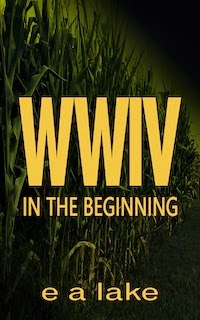
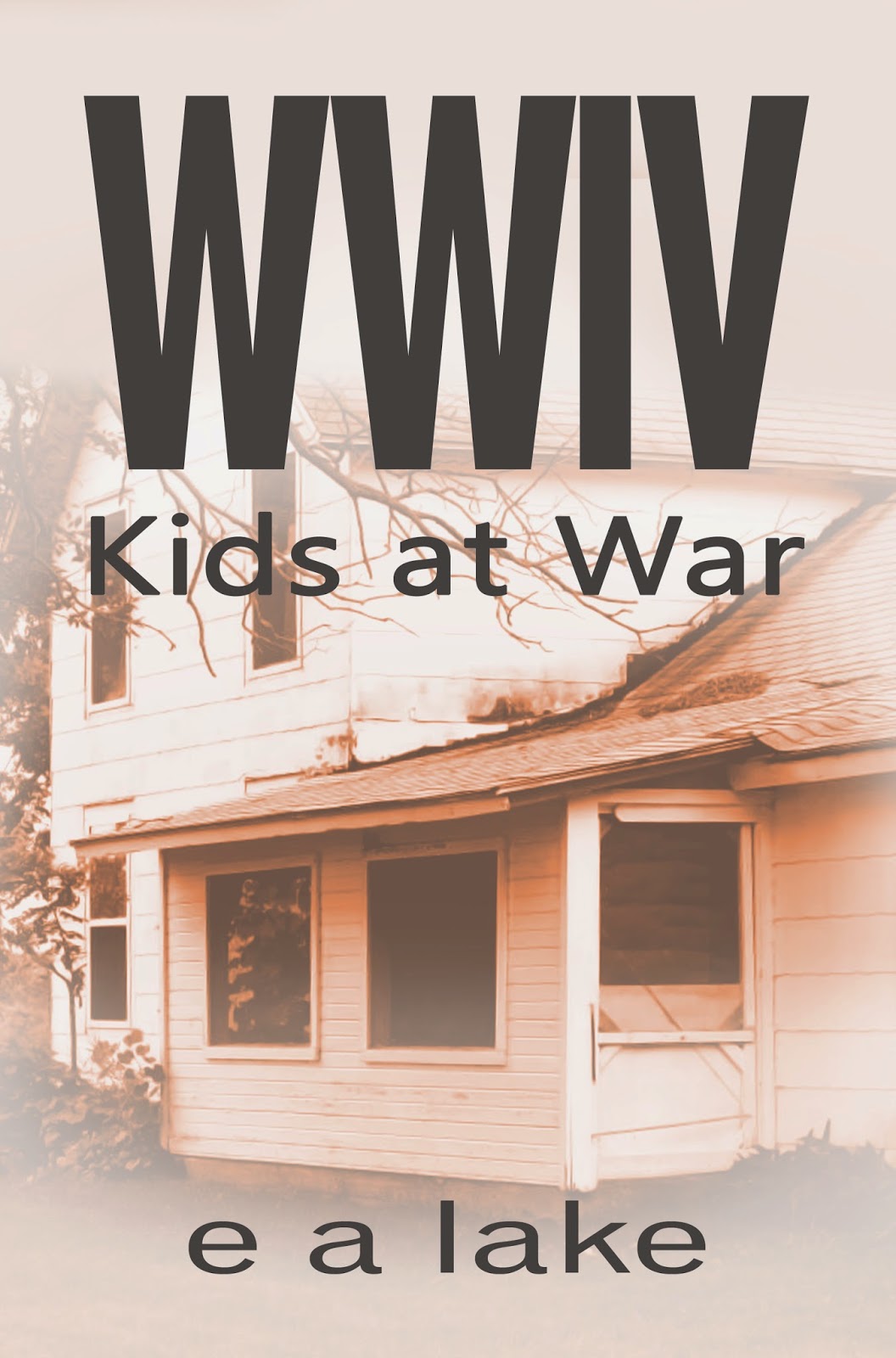
WWIV Book 1

FOUR WWIV Books are now available on Amazon.
Click here for more information.
Showing posts with label reading. Show all posts

Wednesday, January 13, 2016

Best Selling Author -- Leave me OUT!

Consider the graphic below. Don't just glance at it, read it. Read what's written under each picture.


You smiled, didn't you? At least at a couple...the ones you've actually read.

Me? If we count across the top from left to right, I've read numbers 1, 2, 3 & 5. I've read plenty of other Hemingway, so number 4 will have to wait. As for James Joyce's Ulysses - I'm not sure I'm smart enough to read that one.


Show of hands: Who has read 1984

I create in the dystopian and post-apocalyptic genres. As such, Orwell's classic is the standard-bearer for me. But, this doesn't mean everyone loves the novel. Look at these quotes:

"I read it in (high) school, but I didn't really like it. It was weird." -Former Neighbor

"I think Orwell was on drugs when he wrote that book. It's so far-fetched." - College Buddy

"Kinda boring. I prefer Brave New World." 

That last quote comes from my beloved wife of nearly 36 years. How dare she! It is well known that Huxley was an alien from some distant planet, only sent to earth to confuse us. (Okay, I made that part up; but I get irrational when defending George Orwell).

When I ask people about Moby Dick, the reactions are the same

And this is my point. People find a master like George Orwell weird. Herman Melville is boring in their opinions. James Joyce...who even knows. Way beyond the normal person.

Yet, these books are classics. I mean full fledged, 100 percent classics. Even dissenters agree with that thinking. As for people admitting to actually wanting to read these epics... crickets.

I'd love to write a classic, the next Great American Novel

But I don't want people to think I'm dull, or boring. For me, I would rather have a nice group of fans who enjoy the fiction I create. I'm not looking to be forced upon teens in high school. NO! That would give us an entire generation that would read only one of my books, and then say something stupid like this:

"Oh yeah, the teacher made us read e a lake in high school. WWIV or something like that. She said it was a classic. Classic dullsville!"

Selling a few more books would be great. But I don't want to end up in the trash heap of literature! No sir, thank you. I'd hate to be relegated to the likes of Orwell, Melville, Joyce, and Steinbeck. Geez, that would be just awful...right?


Until next week, tell me how many of the six highlighted books you've read. Has anyone had the courage, time, and stamina to read all of them? Let me know.


e a lake


(books below are interactive, so go ahead and click on any of them)


Wednesday, April 8, 2015

Show, Don't Tell (A famous quote most authors understand)

I was mad, really mad. I hurriedly walked into the room. I needed to find my wife and take my frustration out on her.

Okay, before you get too upset, the above sentence is an example of something that any author may write. It is not what was going on right before I began writing today. All-in-all, the above mess gets the point across to the reader. Someone was mad, they hurried into the room, and looked for his wife. We can do better though.

I ran into the living room, my fists clenched, ears ringing. Scouring the area, I noticed my wife missing. "Where the hell are you, Carolyn?" I screamed. "You owe my a huge explanation."

So what's the difference you ask? Simply put, I told you everything in the first sentences; in the second, I showed you what was happening.

One of the most difficult concepts for new authors to get a handle on is the Show vs. Tell idea. Didn't I mention he walked "hurriedly" in the first one? I told you he was "mad". The reader should get the idea, right?

The answer is: maybe

I'm going to try and keep this short and sweet, without going into boring detail. But to me, it's all about the verbs.

Let's start with walked vs. ran. The first problem with the verb walked is that I used an adverb (a -ly word) to modify the first word. "Walked hurriedly" gets the point across, but what we really need to do is search for a better, stronger verb to make our sentence really shine.

That's why I used ran. You can see that action clearly in your mind. The same goes with mad (more of an adjective, yet can be a verb). Don't just tell your readers someone is mad - show them mad/angry.


Another example

The woods was beautiful today. Karen looked at the new green leaves, moving wildly in the strong breeze. She smiled, remembering the woods of her youth.

That's okay, but I basically told you about the scene. I showed you very little.

The breeze caused the spring foliage to flutter as if they were being shook by a giant. A musty odor reached Karen's nose, the smell of decay. She remembered as a child playing in piles of brown and orange as her father raked the backyard. The corners of her mouth curled upward; how long has it been since I thought of Dad? she wondered.

First off, I used a metaphor with the giant. These are great tools, just don't overuse them. Next, I killed the verb, adverb in the first (moving wildly) and replaced them with a stronger verb (flutter) - followed by the metaphor.

I also tell you Karen smiled and remembered her childhood without using those exact words. I gave you the specific memory (dad and/or) raking of leaves. And what is a smile if not the "corners of her mouth curl(ing) upward?"

Writers, good writers, learn how to show their readers almost everything. Rarely will they use words like mad, or happy, or beautiful. No, they show you what mad looks like, what happy might sound like, just how beautiful as rose really is.

 I'm not there yet, though I'm trying. It's hard to get the hang of this when you first start writing. But, as with anything, practice makes you better. Thus, I'll keep practicing.

(And remember to sign up for the free drawing to both of my novels in paperback form. Click here for details.)


Until next week,


e a lake


My Books:


Wednesday, April 1, 2015

April Promo - Paperback Giveaway (Signed)

HI ALL!

I'd like you to enter a giveaway. No big catches, nothing to buy, you don't have to promise to be my friend. All you need to enter is an email address - and I assume if you are on-line reading this, you have one.


What am I giving away? Great Question.

At this time I have two books in print: WWIV - In The Beginning, and, WWIV - Kids at War. By summer I will have two additional books ready for reading. I will be giving away two copies of each (in The Beginning, and Kids at War). One set on April 15th (Tax Day in the US), and another set on May 1st (May Day - all around the world, I believe). All will be signed and personalized for each of the winners.

Here's how you enter:

That's it, sign up and you are entered. I will announce, on my blog - this blog, the winners on April 15 and May 1. I will contact the winners at those times for their shipping information.

And there are no losers in this deal. Just providing me with your email address will keep you informed for future giveaways. I'm already planning a huge 4th of July promo; you will want to be part of my list for that (details in June).

As always, thank you for following this blog. Also, for those who have purchased and read my novels - Thank You, as well. I would be lost in this journey if not for you.


Have a great week, and enter for free paperbacks. Please feel free to enter once a week (if you would like to increase your odds of winning).


e a lake


My Books:


Friday, March 27, 2015

Special Post for a Friend

I am posting a special announcement today from my friend and fellow indie author Rainy Kaye.

Please take a moment and consider purchasing Rainy's newest novel, Stifled.

Also, please take this opportunity to download SUMMONED for free, for a limited time.


Stifled Release
Today we're celebrating the release of STIFLED, book two in the SUMMONED series by USA Today Bestselling author, Rainy Kaye. A dark twist on genie folklore, SUMMONED follows a reluctant criminal as he unravels the mystery of the paranormal bond controlling him. In STIFLED, Dimitri trails an elusive jinn and finds himself in the middle of a community keeping dark secrets. The SUMMONED series is represented by Rossano Trentin of TZLA.

Scroll down to pick up your copy of STIFLED, get SUMMONED for free for a limited time, and enter to win a $10 Amazon gift card.


Stifled Final 2 PSDDimitri would like nothing more than to live a low-key life in Naples, Italy. His girlfriend, Syd, has other plans.

After three months of researching, she is positive she has found a jinn on a killing spree in San Diego, California. Since Syd gave Dimitri the one thing he thought was out of reach, he feels obligated to use his ill-gained talents for her cause.

A few hours back in the US proves that Dimitri and Syd didn't quite make the clean escape they had thought. As they trail the elusive jinn, someone else trails them. What should have been a simple trip to confirm once and for all if the jinn are living among humans, instead reveals a community keeping dark secrets.

Unfortunately for Dim, the only way out is in.

Get your copy here!


Haven't read book one yet? No problem! It's currently FREE on Amazon.


summoned_cover_final_biggerTwenty-three year old Dimitri has to do what he is told?literally.

Controlled by a paranormal bond, he is forced to use his wits to fulfill unlimited deadly wishes made by multimillionaire Karl Walker.

Dimitri has no idea how his family line became trapped in the genie bond. He just knows resisting has never ended well.

When he meets Syd?assertive, sexy, intelligent Syd?he becomes determined to make her his own. Except Karl has ensured Dimitri can?t tell anyone about the bond, and Syd isn?t the type to tolerate secrets.

Then Karl starts sending him away on back-to-back wishes. Unable to balance love and lies, Dimitri sets out to uncover Karl?s ultimate plan and put it to an end. But doing so forces him to confront the one wish he never saw coming?the wish that will destroy him.


summoned free banner


about_rainy_kaye

rainykayeRainy Kaye is an aspiring overlord. In the mean time, she blogs at RainyoftheDark and writes paranormal novels from her lair somewhere in Phoenix, Arizona.

She is represented by Rossano Trentin of TZLA. Someone told her she's a USA Today Bestselling author. She thought there would be cake.


Giveaway

a Rafflecopter giveaway


tour-organized-by

Thursday, March 5, 2015

Just say NO! to profanity

Let's start with football

Late last fall, I watched the Packers hammer the Pats in Green Bay. I watched it on TV, I should add, not in person. I already live in a cold climate, I know what cold feels like. I don't have to go out to enjoy freezing.

Anyway, Tom Brady and Aaron Rodgers faced off on the frozen tundra. The game was an instant classic, maybe. I hate the Pats, and equally hate the Pack. So I was sort of cheering for the end of the world while the game was on; that way they'd both lose.

After one fruitless series, I watched as Tom Brady trotted to the sidelines and let out a string of profanity that even my three-year-old granddaughter could have lip-read. One of the announcers said something like, "That Brady, he's such a competitor." The other mindless boob in the booth chimed in, "Sometimes you just got to get it out and move on."

Really? That's our attitude to open profanity now? Watched by 20 million people. Really?

Later that night I watched the Broncos and the Chiefs. I like the Broncos; I really like Peyton Manning. He's a classy guy.

So Manning trots off one time, after missing a wide open Wes Welker, and shakes his head. As lips parted, I carefully watched for his silent words (thank God they don't have a ton of open mikes on the sidelines). And then the frustration boiled over and Peyton let it fly.

"Dang it," he chided himself. "Dang it!"

Now, let's talk about writing

I know some of you are clever and like to use lots of large, complex words. Some even go as far to fill pages with similes and metaphors. Sentences have perfect construction; paragraphs fly by with seemingly no effort. All is well in your writing.

So explain this to me, as if I were a simpleton: Why do you feel the need to fill your dialog with profanity? Really, I'm dying to know.

I've been told there are good reasons for the use of these kinds of words, sparingly though. Certainly not in every other line. Here's a few of the good ones:

1. Profanity is the language of the real person. Really? You think the Barack Obama uses a lot of cussing throughout the day? I don't. I've heard my mother swear once in her life; sadly in reference to me. Something, I did, made an "ass" of myself. That's it; her big use of profanity, saved up for a one-time use on me - for effect.

2. Profanity makes your writing real. NO! It actual cheapens your writing. You couldn't be any more clever than to spit out a disgusting word that is typically reserved for rap songs and trailer park conversations? And you think that's real? Tell me, how stupid does that sound!

3. The big authors do it, so should we. I know several who use profanity in their writing. Mostly, they use it sparingly, certainly not every page. But here's the rub: They are huge authors, with followings in the millions. You (we) are Joe (or Josette) Schmo; following in the dozens.

Early on in my writing career I read several articles on this touchy subject. The articles all said the same thing: You risk cutting your readership by more than half with the continued use of harsh language. That made me sit up and really think. The occasional "damn" or "hell" is forgiven. Even the once in a while "shit" can fly under the radar. But start dropping f-bombs and people will take notice - and not in a good way.

In 2016, I will introduce you to a character with a military background. In his particular branch of service, the f-word is used as a noun, an adjective, a verb, and so on. Yet, in the almost 650,000 words I plan for the four-book set, not once will he use something as crude as an f-bomb.

Mind you, I'm surrounding him with a family of younger ladies. And one of these young women is on him all the time about his salty language. "Really, Mr. Smith. Must you be so crude?" And that follows him telling her to "mind her own damn business." There are plenty of other ways to get his hardened personality across. I chose from the onset to portray John Smith's crustiness to my readers without resorting to long tirades of profanity.

In the end, it's your choice

So choose wisely, please.


Until next week, enjoy life through the eyes of another... in a book.


lake


My Books:


Thursday, February 19, 2015

Choose Your Words, and Commas, Wisely

Let's look at a few sentences so we can see what happens when grammar and punctuation are abused.

Let's eat Grandma.

I must admit, this is one of my all-time favorites. We assume that you are calling grandma for lunch or dinner here. Like she's in her room, or favorite chair, taking a nap. But that's not what this sentence really states.

In the sentence above, I can only decipher that grandma is dead, and we are going to have her for supper. What? You ask, reading the line again. Yes, I tell you emphatically, that is the true meaning of that sentence.

Perhaps you meant this instead:

Let's eat, Grandma.

Now that sentence gets across the first idea and leaves no room for doubt as to what you were trying to say. That was fun, let's do another.

Your donation just helped someone. Get a job.

Believe it or not, this comes from a sign at a charitable organization. I saw the sign myself. I'd really like to meet the person who wrote and designed this one. Or even the proofer who gave the go ahead to have these signs made up.

Here the sign offers two thoughts, one intended and the other - well, not so much. My donation helped someone. That's good to know. It makes me feel better when I drop off ten pairs of pants that are almost brand new and don't fit any longer (weight loss, not gain, in my case). I can already envision a man, down on his luck, gleefully pulling on a pair of work-causal khakis.

The second part of the statement (after the period), reminds me to go out and get a job. At the very least, it is reminding someone to get a job (I have two, thank you).

I bet they meant for the sign to read like this:

Your donation just helped someone get a job.

At least I hope that's what they meant. The original version is otherwise slightly rude I'm afraid.

One more before we close for the week.

Cam and Mitchell are competent, loving parents, both are lawyers.

Okay, first off if we are speaking of the two characters on Modern Family, they are not both lawyers. Only Mitchell works in law; Cam is a stay at home dad who does some "clowning" on the side. Glad to get that straightened out up front.

Next, I have no idea what the above sentence is trying to tell me. Are they competent men, loving parents, and lawyers? Perhaps they're competent, loving parents first; and lawyers second. Or maybe they are competent lawyers and loving parents. It's all messed up in my mind.

If I was going to rewrite this sentence, this is what I'd most likely do:

Cam and Mitchell are both competent, loving parents, and lawyers.

I might take the word "both" out of the sentence completely. I think it only adds confusion to the statement.

By the way, it's a good thing I didn't mess up the title of this post. It would have been embarrassing to see it in this form:

Choose Your Words and Comas, Wisely

That's just all kind of wrong and on so many different levels.


Have a great week. In the last month, I've reread The Jungle, by Upton Sinclair and Catch-22, by Joseph Heller. If you haven't read either, I highly recommend them for a great read.


e a lake


My Books:


Wednesday, December 17, 2014

Five Mistakes budding authors make

Now that I've been a writer for almost two years, I'm starting to get the hang of things. Anyone more than a couple years in knows what I mean. At first, everything is terrible...and you have no idea why. But after almost 750,000 words put down on page, some of this begins to make sense.

After going back and reading some of my early creations, I began to notice the constant mistakes I made. Two years later, I've beta read a lot (and I mean a lot) of new authors work. Guess what? Many of them made the same mistakes as I. Let's investigate some.

1. We use too many adverbs

Actually, we new writers seem to be in love with adverbs. Quickly, rapidly, gruffly, shyly. And most of the time, they made sense...at the time. Consider this:

"I just don't know anymore," Charlotte added shyly.

Okay, that makes my stomach turn when I look at it now. Before, it was beautiful prose; a penned masterpiece worthy of high praise and laurels.

Charlotte peeked at me, her brown eyes barely visible through her long lashes. "I just don't know anymore," she added, letting her eyes return to her quivering hands.

Aside from removing the adverb, the sentence has also become much more active. Here we let her actions tell us of her shyness, her uneasiness with the subject. Before, well it was just blah.

Steven King says kill all adverbs; I tend to agree. If you search your manuscript for every one of these buggers and strike them away, you'll still have plenty left that you've missed. Adverbs, it seems, are perceived to be lazy writing. And I really can't argue with that statement.

2. We tell instead of show

I have a confession for you; at first, I had no idea what this phrase meant. If I wrote, Jim was mad, I believed that conveyed everything the reader needed to know. And to be honest, if you don't have a problem hanging with the B and C level writers, it's fine. But we're missing something if we accept the prior sentence as prose.

The young writer often misses the opportunity to use any of the five senses most, if not all, human beings possess. Let's revisit - Jim was mad.

Sight - I bet his face reddened, or his lips tightened, or his fists clenched by his side.

Sound - Maybe he snorted, perhaps his breathing became labored - audibly.

Smell - We can use this to contrast Jim's foul mood. The scent of lily's dissipated as Jim's anger rose.

Touch - I reach for Jim's arm and feel it tense. Or perhaps he jerks away.

Taste - I'd really have to reach to use this sense in describing Jim's mood. And chances are I would blow it, badly.

Not every situation can be told via all five senses, but the crafty writer includes them here and there to draw their readers into his or her story. When done well, the reader becomes part of the tale; as if they are standing amidst the characters, involved in their interaction.

3. The NSV Issue

Let me ask the world a question: Who told you to write all of your sentences in the same order and all the time?

Dick ran fast. Jane ran faster. Spot crapped on the carpet.

Noun, subject, verb... BORING!

Mix things up; don't copy, paste repeat. And while we're at it, please vary the length of sentences and paragraphs. If everything looks and sounds the same  line after line, page after page - we loose our readers shortly after mid-first chapter.

4. Dialog Tags

We put them in the wrong places, we misuse words we believe are tags, and we love to help them with an adverb (see mistake #1 again).

I read a manuscript last year where all of the dialog tags preceded the dialog.

Joanie said, "We don't have much time, Robert."

I had never seen this before. Wait, check that; I've seen this before, but rarely. I'd never read an entire book, novel, or manuscript when the tags came before the dialog. I still don't think it's correct, but I believe that's just a style issue for me; not a hard and fast rule.

"Better hurry up, we don't want to be late," Betty sang.

Yeah, about that. Unless Betty put the words to a melody, I don't believe "sang" should be used as a dialog tag.

"I just don't know any more," Charlotte added shyly.

Again, this is from mistake #1. Don't do it, please!

Some will tell you the only two dialog tags to ever be used are "said" and "asked". After all, most people don't even read the tags. So what's the point in singing or chuckling or spitting words at one another.

5. We forget the plot of our own creation

I'm guilty of this myself. Sometimes I get all caught up in action and dialog and forget to advance the plot. After writing a sentence (okay, perhaps a paragraph) ask yourself this:

How do the preceding words move the plot forward?

At times, my best stuff gets chopped because it doesn't meet the plot test. Great dialog and interaction - gone because all I'd created was fluff. If you take it out (sentence, paragraph, even a whole chapter) and it doesn't change the story and won't be missed, you've created mere fluff. Just something nice, in your mind, that shows this or that about a character or setting.

Steven King says, "A proper second draft, is the first draft minus 10 percent."

Ernest Hemingway once wrote, "The first draft of anything is shit."

So there, even the masters realize that not everything one pens will make the final cut. Look for your plot holes. Be stringent in recognizing writing the adds little to the story. The story, after all, is everything. The fluff we tend to create - sometimes just to add to the word count - needs to go.


There you have it; my top five mistakes from the first two years of writing. Remember, I'm guilty of all above. If you're honest with yourself, and please be, you'll agree with most.


Until next time, enjoy the holiday season. Even if it's not your holiday. Take time during the soon arriving longest night of the year to start reading the classic tale you've always wanted to.


lake


Wednesday, December 10, 2014

My Advice for Newbie Authors

1. Take Your Time

I know, you've got the next Great American Classic ready to roll. All you need to do is put down about 200,000 words and hit the publish button. Within a month, okay - maybe six weeks, you'll be lauded as the next Hemingway.

Here's my advice - slow down buster!

Many will tell you the same tale; it takes a year from start to finish - first words down to publication. And that's if you're lucky. For my smaller novels (60K to 75K words), it's been an average of nine months each. I have two larger works in rewrites (both more than 120K words), and they were started more than 18 months ago. This task takes time...if you want to do it right.

That worst part is when you are all done: betas say yes, you've fixed those pesky rewrites your editor insisted upon, and you've read your darling one last time, cover to cover, to be sure that everything is perfect. And now you're ready to hit the publish button.

Ah, the publish button, yes. However, before striking that key, you need to be sure your manuscript is properly formatted and will come out the other end looking like a novel - not something you produced in third grade. Formatting will take time, more time than you plan. Because even when properly formatted, sometimes your output looks - well, trashy.

I've had chapter titles slide down the page with each successive chapter. I've had pages that went beyond the printable area. I had three pages of back matter magically condense into one and in tiny little font.

There's going to be issues in every step of this process. So relax, enjoy it, and do your best. That novel you are starting tomorrow will not be ready for Christmas. And that's okay.


2. Read, A LOT!

Read every day if you can. And read outside your genre of choice. If you do this, something amazing could happen. You may become a better writer.

On average, I read a book a week. Now some of these are mere novellas, short works of fiction. But others are actual large epic classics. The point is this, I read a lot. Probably two hours per day is my average. And you should too.

I know, I know - you have a busy life. Maybe you have kids at home; I'm an empty nester. Perhaps you are going to school; not me. Maybe you work two jobs; don't we all? Whatever your excuse, is just that - an excuse. I too work a full-time job. I too spend two hours plus a day work on my books. I too have family and the commitments a family brings. But I still make time to read.

When I read the first Jack Reacher novel, I was in the midst of creating my first manuscript (Golden 5 - not yet released). I found something unique about Lee Child's first novel; it had a lot of short sentences. Three, four, and five-word sentences covered the pages. At first I didn't get it, I found the writing simple, too simple perhaps. But the further I read, the more I discovered that it matched his character perfectly.

Ever read The Great Gatsby? No? You should. It is a literary masterpiece in my mind. The flow sweeps the reader into the 1920s and the lives of Nick Carraway and Jay Gatsby, Fitzgerald's use of language, and all its elements, amazes me to this day. Give it a read, or a reread. You will learn what the masters have, and how they use it.


3. Don't Take Yourself, or your writing, Too Seriously

This is an important bit of advice. Because creating a manuscript, having it beta read, muscling through rewrites, having it edited, and fussing over the last few fixes has a tendency to create a monster. And that monster is your baby - your novel.

By this time everyone you know will have told you how great it is that you wrote a book; whether they read the beast or not. "I could never do that," is a common phrase you will hear. You mother will tell all she meets what a wonderful writer her baby has become. The praise will be never-ending, head swelling, and lethal.

Lethal? you ask. Yes, LETHAL!

Here comes your first review; they loved your book. Okay, they liked your book. To the reviewer it's obvious this is your first novel, and they give reasons. Your blood pressure rises. Then they mention the book could use a good edit; your fists clench. What the devil do they think my relatives were doing? you ask yourself. It shows promise, but the author shouldn't quit his/her day job...just yet at least. Here it comes; are you ready?

They give it two stars. Not a literary masterpiece, but worth reading...perhaps.

Let me bring you in on a little secret. You see a lot of books on Amazon, a whole bunch. And you can find many books languishing mid-range (say 1.5 to 1.8 million on the Amazon scale). And a lot of these books have a dozen or more five-star ratings. Perhaps your work will as well. That's what friends and family can do for you. They give you a nice boost, but it never actually helps sales.

At the end of the day, most authors will be lucky to sell 500 copies of any book - in their lifetime.

This is a tough business, people. It helps to have a good sense of worth, and tough thick skin. And a decent sense of humor doesn't hurt either.


Two weeks to Christmas; enjoy the holiday season, however you celebrate. And consider buying a small child their first book.


lake

Wednesday, September 17, 2014

How To Write A Novel

Okay, you got pen and paper? Or just a computer? Well then, you are ready to get started. Really, it’s that simple. However, that’s where the easy part ends.

You have a grand idea for the next Great American Novel. Welcome to the club; a very large club at that. So many of us have the same idea. We know we can create a tome that will go down in the annals of history as a creative masterpiece. Thus, we begin.

How to Start Your Story

I like to let an idea fester like a bad sliver. And the longer the better. All of my manuscripts have aged six, seven, even ten months before I ever wrote the first word. As a note, I’m almost done with my sixth such writing. All in the last 19 months. That’s somewhere around 650,000 words in that time.

Where do these “ideas” come from? I really don’t know. Sometimes I dream a certain sequence that I play with and mold into a story idea, and later a plot develops. Then there are the times I see something somewhere and I ask the famous “What IF” question. And of course, my favorite is when I daydream an idea. That’s what happened with Book Two of my WWIV series – Kids at War.

One morning last summer, I was sitting at the cottage in Northern Wisconsin, watching the sunrise. I was deep into my WWIV series having completed two manuscripts in The Smith Chronicles books. I asked myself, “who will be most vulnerable in a post-apocalyptic setting?” I thought for a while, sipped my coffee, and thought some more. Finally, an idea popped. From there I played with it and the story started to develop.

How to Develop Your Story

I’ve seen all kinds of systems for story development. Some like to storyboard the entire novel before beginning. They take note cards of various colors, jot down scenes or plot points, and then pin them to a bulletin board. From what I understand this is a great system with few drawbacks.

Others, like Stephen King, sit down and start typing or writing. They know the general idea of the story. They also have the confidence to allow the story to create a life of its own. This probably is not the best option for you if this is your first or second manuscript. This method requires you to use your brain, A LOT, and if you lose yourself – you story can be lost!

I like to outline when I write. But it’s not a strict, rigid outline. It’s extremely flexible and allows much room for change. Usually, I only plot out the first ten chapters or so. I might make some notes for further chapters, but I know my writing style. I might get to chapter eight and discover things are going a different direction. Or it’s going slower (or quicker) than I had planned. My point is this – allow your story room to grow.

How to Write Your Story

Let me be as gentle here as I can.

Strap your butt to the chair and write. Write until you’re out of ideas, and then write some more. Don’t feel creative on a given day? Tough; write 500 words. Feeling super artistic and pop out 2,000 words? Come on, push yourself; write another thousand.

The moral here is to keep writing. The goal should be to get the first draft done in three months. That’s 90 days; plenty of time. This past February, I created the first (rough, very rough) draft of Book Four in the WWIV series in 28 days. Now, to be honest it's not going to win any literary awards in its current state, but it’s done. The book (actually a manuscript at this point) is on paper and ready for the first round of revisions. I already have an extra scene to add, something to ratchet the pressure up a notch.

If you do all the pre-work, but don’t write – you’ll never get done. No one will ever know your creative genius. People will never discover you as the next Ernest Hemingway, Jane Austin, or George Orwell. Please, if it is your desire, write! You will never know the rush of excitement when you publish your first novel without putting in the time, and doing the work.


Until next time, enjoy fall this year. Get out and appreciate nature in its changing beauty. And since the nights are getting longer – grab a good book and give it a read.


lake

Wednesday, August 27, 2014

Learn from MY mistakes

"Mistakes, I've made a few, but then again, too few to mention..."

Can you name that song? (My Way)   How about any of the many performers? (Elvis should be first on the list)   Whenever I hear that song, or read the words, the voice of Elvis Presley jumps into my head and takes over. It did just now, writing those words again.

But, the point to this week's post is about learning from mistakes, my mistakes. And trust me, I've made plenty. So whether you're a first time author, or somewhere in your sophomore year (like me), please read on.

Mistake #1: I rushed my first novel to press

In my defense, I wanted to have it on the market in November of 2013. I had to wait, and none to patiently, until March 28, 2014. I know, that's only four months. And in a lifetime that will hopefully span 80+ years, it's a mere 0.4% of my time here on earth. But I really wanted it out for Christmas! Big mistake.

Even when I released it on March 28th, it still wasn't really ready for publication. In the first three months I found, and more embarrassingly readers pointed out, at least two dozen grammar, punctuation and misplaced word mistakes. Had I waited for a few more people to carefully read the book, I could have avoided these issues.

Mistake #2: I skipped the line editing process

This kind of goes with the first mistake actually. But even if I had rushed the publication of my baby, and had taken the time to somehow get the darn thing line edited, it would have been a much better piece of work.

Now, line editing can be expensive; I realize that. In place of the cost I could have had three more betas read the final version and asked them to look for everything that made their eyes bleed. Here's an example:

On page 153 of the original paperback proof, near the end of the first paragraph, it reads:

The was no way could I object to her request. (Think could and I got transposed there?)

I read through this manuscript more than twenty times. Members of my family another dozen. Four beta readers saw this version. And still no one caught this error until approximately July 15th. That almost four months after I released the book. UGH!


Mistake #3: I failed to plan any promotion for the release

This was kind of silly on my part; especially since I did it on purpose. Without any fanfare, I quickly struck the publish button on the Amazon KDP site at approximately 3:30 p.m. on March 27, 2014. The next day the novel was on Amazon in ebook format. Yay me...

Sort of.

You see, I wanted to find out if this book would grow organically. I wanted it to live or die on its on merits. That was so stupid on my part. I failed to realize that most ebooks by first time authors rarely sell many copies, outside of their family and friends. Most of the time they don't sell any outside of your inner circle.

But dumb me decided to do an experiment. So when I sold my first copy on March 29th or 30th, I patted myself on the back and beamed proudly. It worked; my great cover and perfect blurb were enough to sell my novel. I got lucky; I've sold plenty of copies of WWIV - In The Beginning. For my next book, I plan on doing a much better job of promoting the book's release...ahead of time.


So, learn from MY mistakes

Don't rush things, take your time. Make sure you put the best possible product in front of the public. And plan your release. Plan a promotion of any size. Just do something! Anything is better than what I did (or failed to do).

Do you have mistakes form your debut novel you'd like to share? Please feel free to add them in the comments below. Realizing that everyone makes mistkes helps us all feel better - more human.


Until next week, keep reading.


lake

Monday, August 25, 2014

Special Giveaway Reminder: Last Two Days


Goodreads Book Giveaway


WWIV by E.A. Lake

WWIV

by E.A. Lake


Giveaway ends August 31, 2014.

See the giveaway details
at Goodreads.

Enter to win

Friday, August 8, 2014

Organic Growth - The Best of Books

Okay, so today is Friday August 8th, 2014. As of this morning I have sold almost 3,000 copies of my debut novel, WWIV - In The Beginning. From what I'm told by others, that represents a good start to my writing career. By this time next month Book Two in the series - WWIV: Kids at War - will hit the charts and I can only hope for as good a showing as Book One.

Here's the thing, most of these sales, most of the growth in the sales of this book have been organic. That means I've spent very little on advertising in attempts to sell the novel. Most sales have come via Amazon's amazing search engine and recommendations.

Since some books sell poorly, I can't give all the credit to Amazon. Some of the credit actually goes to the book itself: The unique cover, the sales blurb, the concept, and of course the genre. Let it be known that many readers in the Dystopian/Post-Apocalyptic genre are veracious readers. They devour new concepts and novels like my dogs with their food at dinnertime. For that, I am thankful!

Organic Growth Rocks

And I bet you know why, don't you?

First off, you don't have to spend a lot of money to get traction. The book (and Amazon) do the hard work. To date, I have spent $562 to promote Book One. I can't really tell you how many copies have been sold as a result of this advertising, but I figure somewhere around 200 - 300 is the actual amount. There's probably been a small residual affect as well, so let's say 400 copies have been sold thus far as a direct result of my advertising efforts.

The second benefit, and this is key, is the readership I have gained. Most people (at least 85% this far) have chosen this book by their own volition, with no outside input influencing their decision. There's good likelihood that as many as 80% of those readers will consider purchasing Book Two (and Three and Four and Five). This allows me the luxury of concentrating on my writing, instead of wasting hours consider various advertising options.

Not all marketing is created equal

This really goes without saying, but it's always worth repeating. I have tried playing with a number of advertising options. Some popular to many, others not so common. I know for a fact that when I stopped one certain method, my sales remained stable (actually, they increased slightly). Saved some money on that one.

About a month after the books release I did a small blog tour. I saw sales jump immediately and remained at a higher level for a number of weeks afterwards. That was the best $135 I think I've ever spent in my life. I am definitely using that tour again for Book Two.

So the moral is this: Use your money wisely!

Shoot for Organic Growth

And just how do you accomplish such a nebulous task? Here's five pieces of advice that you've read before, but (again) are worth repeating:

1. Write a great, and unique, story/manuscript
2. Have that manuscript professionally edited
3. Get a professionally designed cover
4. Format your manuscript into the best ebook/paperback out there (or hire it out)
5. Spend your (small) advertising budget wisely. Consider a Book Blog Tour

That's it, really. Do you best; give everything 110%. And realize that some books won't sell many copies. That's just the way it goes - sorry. But don't give up. Get writing immediately on your second book. You'll be surprised how much easy it all is the second time around. And learn from your mistakes on book one. I know I have. And I've made plenty of mistakes on this journey so far.


Next week we'll have a lively discussion about fear - rational and irrational. I promise to keep it light.


lake

Wednesday, July 30, 2014

Charity: Begins at Home

Sometimes it's real easy to say you support this or that, or maybe you post a whole series on it. That's all good and fine, but I want to do more for the causes I support.

This week I announce specific plans to support each of the issues I feel strongly about. Immediately below you will find the issue, and the level of my support. I am pledging support upfront with these causes. I'm not waiting until I've made X amount of money or sold Y amount of books. Something from each sale, not matter how large or small, will be contributed to these causes.

By making my plans known upfront, I allow my readers and followers to hold me accountable to these promises. As such, I ask that each of you share this with two or three of your friends. And have them share it with their friends.

Without further discussion, here goes:


LITERACY

A well read population is a better educated population. Many authors support this cause (literacy) and I do as well.

September is National Literacy Month. That makes September a perfect time to set aside some money for the promotion of literacy.

During the month of September, I pledge to give 20 cents from every book sold to help promote literacy, both here and abroad. I place no cap on this pledge. If I sell 1,000 books, $200 will be donated. If I sell 2,000 books, $400. You get the idea.

So far I've sold an average of 700 books a month. September will see the release of Book Two of my WWIV series. Thus, I anticipate higher numbers. As a base pledge, I will give $140 to literacy no matter how many books I sell.

So, it's up to my readers as to how much above that $140 mark I will give. Again, NO top end. Twenty cents on every book no matter how many books are sold.

I will spend the next six weeks vetting the best place for this donation. If you have any suggestions, please feel free to contact me via email at: ealake5@gmail.com.


ANTI-BULLYING

This is something that needs our attention now! Our children of all ages need to feel safe. They don't need the stress or concern or intimidation caused by bullying. As such, I will help.

October is National Bullying Prevention Month here in the US. That's a great time to focus on this cause. I really want to do something special here.

During the month of October, I will create a small novel (novella) of about 30,000 to 40,000 words that deal specifically with this topic. Now, it will be symbolic for the most part, and the bullying that occurs will be hid in a metaphor. But I think you are going to like it.

If I write it in October, it will be edited in November and ready for release on Amazon, Barnes and Noble, iBooks, Smashwords, etc... before Christmas. I'm thinking this will sell for 99 cents on all outlets (to make it affordable). It will still be Dystopian in nature, but I have the perfect setting and storyline that will bring bullying to the forefront.

For as long as I'm alive, I pledge 75% of all net proceeds from the sale of this story towards various anti-bullying causes. If enough copies sell each year, this amount could be nice. At a minimum, I will give $250 to the cause each year - regardless of how many copies sell. I will try and announce each October how many copies sold in the last year and how much money was given.


SUPPORT OUR TROOPS

Another worthy cause. Bodily injuries, mental anguish, emotional distress - all harms that befall our young men and women who serve their country voluntarily. While Washington, and our taxes, do provide some help, more is still needed. And that's where I'll help out.

Next year (2015), I will be releasing  Book One of a new series, The Smith Chronicles. This first book will be released under the title of Golden 5. There will be at least another three books in the series. Each of these books is almost twice as long as my current series. I'm planning on making them great reads, for my great readers.

While this series is more Dystopian, and not post-apocalyptic, than the WWIV series, there will be plenty of action and suspense. Chances are Golden 5 (and the subsequent books) will appeal to a wider audience than my first series. As such, these should be good sellers.

From this series, I pledge 25% of all net proceeds to be donated to causes that support our troops and veterans. As 2015, and the books release, draw closer - I will let you know what causes the money will go to. One will have to do with physical injuries - a charity similar to Wounded Warrior Project. Another will deal will emotional and physical problems - something like Soldiers to Summits. Still another will deal with PTSD, and a last will be a local California organization where MY Marine spent the first four years of his service.

If this series sells exceptionally well (and I have no idea what that means after being a published author for only 4 months) I will use some of the funds from these books to help equal out support for the first two causes mentioned above. If I make $10,000 from the sale of this series, I will be more than happy to give away in excess of $2,500. There is no limit to how much I feel I should give. I have already exceed my expectations (and wildest dreams) with the sales to date of WWIV - In The Beginning. I'd like to make a difference in this world; I'd like us all to make a difference. And together we can...we will!


Until next week, read a classic or a brand new author. You never know what's waiting for you in the world of books. And take a few minutes during your week to perform random acts of kindness.


lake


Wednesday, July 23, 2014

Support Our Troops

No one hates war more than me. Okay, maybe I'm tied for first place in the disliking of war category with two billion others. But you get the point, I don't see much good coming from war. What was it that General George Patton said? "War is hell!"

If that's your motto, I've got a new one from you to try.

Hate the war, but love the warrior

I really, really believe in the above statement. And I passionately support it when it comes to our troops. I'm talking about the troops that represent The United States of America. The US Marines, the US Army, the US Navy, the US Air Force, the Coast Guard, and the National Guard. All of them; as well as troops from whatever country you read this post in. Full-timers, reservists, volunteers, professionals...all of them. Each and every one of these men and women have my undying admiration, non-wavering support, and complete respect.

When I was younger, we were in the middle of the Vietnam War. You think protests and negative feelings of war are bad now? You haven't seen anything. The late 1960s were terrible times to be a soldier. "Baby Killers" is the label that always sticks in my mind. Here was a group of young men only doing what their country asked them to do. They came back home after their service was over, expecting a hero's welcome. Instead, they were greeted by angry mobs of young adults who, amongst other things, spit on these people. Yes, they actually spit of young men in uniform, young men who couldn't comprehend the other's actions.

Love the warrior

Nowadays, the young men and women that serve in our armed forces have predominantly volunteered. No one drafted them, no one forced them to join, no one put a gun to their head. Of their own free will, they joined. Now, perhaps they didn't quite realize just how dangerous their service might be, but they still came freely.

Some will say, "They chose this, they're paid for this; so they should have known what they were getting into." HOGWASH! As little as eighteen months ago, many of them were at their senior prom. Their toughest choice was who to take, or where to eat, or would Dad give them the good car for the night. People occasionally got hurt in their schools, usually out of stupidity. But all in all, life was simple.

Fast forward time: Some have been injured, seriously. Lost arms and legs, eyes. Horrific wounds cover some of their bodies. They will never be whole again. Yet they survive.

Some have internal wounds. Wounds we cannot see; wounds hiding under the surface. Sometimes our soldiers don't even know these wounds are harboring inside their heads. But they will come out; these wounds will rear their ugly head eventually. They always do!

These young men and women have seen things that will never go away. They watched as their friends and buddies died next to them. They witnessed people being blown to pieces by IEDs. They were shot at and missed - sometimes shot at and hit. We can try to understand what they have gone through, but make no mistake - we will never fully know know their plight.

Our warriors need our help

A number of years ago I was involved in a very serious car accident. I had very few external injuries, but the damage done to my back was permanent (as you would expect in a rear-end accident). About 18 months later I suddenly realized one day that my memory wasn't as sharp as it had once been. I misplaced my car keys (A LOT). I would enter a room and suddenly have no idea what I was there for. And one night I actually got lost on the way home from work. I mean really lost; like to the point where I was panicked, badly! I had a mild brain injury.

My injuries, both internal and external, are nothing compared to what has happened to some of our troops. I didn't lose a leg, or an arm, or an eye. I never saw anyone shot through the head by a sniper. I haven't watched as the vehicle in front of me exploded into the air after striking a roadside bomb. I understand, but I will never ever have a full knowledge of what they are going through.

I read this the other day:

There are 23 Military Suicides Daily

This, my friends, has to stop. We have to do something to stem the tide - before the problem takes care of itself, tragically, right in front of our eyes.

I began my first novel, Golden 5 (releasing next spring), because I had an idea to make people more aware of the problem of PTSD. Almost every day I see a news story about a young man who has given up hope and killed himself. Or I read on an online post from a young woman who is hanging on by her very last thread. Family members are being caught in the crossfire. Our young are dying because we don't have any idea of what to do.

They've served bravely, honorably

And now it's our turn. Perhaps you do hate war more than me. I just hope you love our warriors as much as I do. These are our sons and daughters, nieces and nephews, grandchildren, the neighbor's kids, someone from your church. They've already survived the war - Let's make it so they can survive once they get home.

Next week I will tell you how I plan on helping. 

Over the past three weeks now I've spoken about Literacy, Bullying, and Supporting our Troops. These are the causes which I proudly stand beside. I plan to help, not matter how large or small, to the best of my ability. I ask that you help support these deserving needs either by purchasing a particular book I will speak of next week or by direct contribution to the charity of your choice.

This is our world. These people in need are our family and friends. It makes no sense whatsoever to sit and watch, turning a blind eye when convenient. By making my plans public, at least I should be held accountable by my readers. And accountable I will be.


Until next week, keep reading - because that's what you're supposed to do during the summer!


lake