WWIV Book 1

FOUR WWIV Books are now available on Amazon.
Click here for more information.

Friday, February 28, 2020

What Will You Eat When the World Ends?

This post and the next three to follow are taken from an article I found online with the same name as the "Subject Line". They were written by Tove Danovich and posted on 9/16/15. The entire original post can be found here: http://bit.ly/2T8oqu0


-------------------------------------------------------------------------------------------------------------


It could happen at any time. Maybe an asteroid will hurtle toward Earth or a storm will cover the world in ice. A bite from a particularly angry monkey could start a viral zombie plague. The Internet could even shut off. Things could go to hell because of monsters or uncomfortably sentient robots, nuclear war or a terrorist attack. The question you should ask yourself is: What will you eat and drink when the world ends?


The people answering this question aren't scientists, the military, or NASA (though maybe there's a secret apocalypse science division in the government). They're known as "preppers" and are usually everyday folks with normal jobs — teachers or bankers or candlestick makers. The only difference between you and them is that they want to be ready when, in prepper jargon, SHTF because it's TEOTWAWKI ("the end of the world as we know it"). While FEMA's guide advocates for having a disaster kit consisting of a 72-hour supply of food, water, and clothing packed and ready to go, that's just a baby step for preppers. Come back when you've stored up enough to last you a week, a month, or a year.

"Hurricane Katrina proved to a lot of people that everything you have can be wiped out very quickly," says Pat Henry, founding editor of the Prepper Journal. He explains that everyone has to focus on four categories of survival — food, water, security, and shelter. Since 2008, Henry has been slowly stockpiling backup supplies. He's used rain barrels, water filtration, and bottled water to amass "hundreds of gallons" of H2O. "It sounds hokey, but I had a gut feeling that I needed to take steps to protect my family," he says. While one Daily Mail UK article estimates "there are three million preppers in the U.S. alone," no one knows who estimated that number, and it's unlikely that there are actually solid statistics on the subject — thanks to an inherent secrecy within the prepper community.

But despite prepping's mysterious exterior, everyone seems to agree on the basic principles of planning, buying, and storing food, water, and cooking utensils one needs to survive a disaster. According to the experts, there are three rules that will help you prepare for the end of the world.


Until next time,

e a lake

Rule One: Keep Your Groceries Hidden

This post and the other in this series are taken from an article I found online with the same name as the "Subject Line". They were written by Tove Danovich and posted on 9/16/15. The entire original post can be found here: http://bit.ly/2T8oqu0

----------------------------------------------------------------------------------------------------

Though preppers are very active behind screen names on the Internet — on groups like the American Preppers Network or websites like the Survival Blog — they stay under the radar in real life. It's not because they think their hobby is strange, but because when the end of the world comes, they don't want the entire starving neighborhood to know that their house is the one full of potable water, heat, and enough food to last a full calendar year. "The first rule of prep club is you don't talk about prep club," says Lisa Bedford, a mother of two teenagers and a prepper also known as the Survival Mom. As a result, there's not much in the way of hands-on education. "The community is online because people want to be very careful and cautious about who they talk to," Bedford explains. Bedford says that she has cultivated a small group of neighboring preppers who she could rely on if SHTF ("shit hits the fan," naturally). "But I have no idea how much they actually have."


Overall it seems like the secrecy is directed toward non-preppers: No one wants to get themselves into an ant-and-grasshopper situation where they're sharing supplies with the non-prepared deadweights of the neighborhood. Within the prepper community, however, there are websites like Prepper Dating and Survivalist Singles (just because it's the end of the world doesn't mean you have to be alone). Other forums facilitate people who want to either connect with neighbors or actually gather enough strangers to fill a home with like-minded survivalists.

Survivalists come in all shapes and sizes. Like any subculture, the people involved fit somewhere on a spectrum of intensity. On the one hand, you might have someone like Bedford, who began prepping as a backup plan if her family lost their primary source of income. On the other end are the types of people who build underground bunkers and whose security plans look like a mini National Guard.

But while outsiders familiar with prepping have a tendency to think survivalists have a streak of insanity, it's actually not all that different from the practice of homesteading. "They call it something different and do it a different way, but the end goal is the same," says Henry. He specifically references the local food movement where many people have taken to knowing their farmer or growing their own produce because they don't feel like they can rely on the government, big food corporations, or other overseers to adequately check the quality of what they're eating. "A large part of both movements is the concept of control," Bedford says. This is one reason why interest in prepping seems to increase after natural disasters, economic crises, or another traumatic event. It allows people to feel like, at least next time, they'll be prepared.


Until we meet again,

e a lake

Rule Two: Don't Store What You Can't Eat

This post and the other in this series are taken from an article I found online with the same name as the "Subject Line". They were written by Tove Danovich and posted on 9/16/15. The entire original post can be found here: http://bit.ly/2T8oqu0

----------------------------------------------------------------------------------------------------

Though tents and bunkers might suffice for backup shelter, storing food and water is a much more involved process. It's not quite as easy as running to the local grocery store the day before a storm and buying up all of the bread and kale left on the shelves. People who are getting into prepping often treat food and water storage as the true first step. While water can be stocked in the form of water bottles or rainwater-capture systems, food is not as easy as following a pre-made grocery list off the Internet.


When Bedford began preparing for the possibility of economic disaster in 2008, she quickly fell on food storage as a place to focus. She says that a lot of people do their own food storage — particularly homesteaders or people who live so far from the grocery store that it's inconvenient to go more than once a month — but that as a "typical suburban stay-at-home mom" she initially felt out of her depth. "It was a whole new world," she says.

The main issue is that stored food is only as useful as your willingness to eat it. "Food fatigue is a real thing," Bedford explains. If all that's in the pantry is rice and beans, the monotony of the diet would eventually make anyone lose their desire to eat.

To get a varied diet, Bedford advocates a three-layer approach to stocking the pantry. The first layer takes place at the grocery store — specifically in the canned food aisles. "The reason canned food is so important is that its shelf stable," Bedford says. That said, don't just purchase whatever is on sale. "Focus on things you'll eat and your family members will eat," she adds. And don't forget the spices: Adding new flavors to the same base ingredients is an easy way to combat food fatigue while sticking to a few pantry staples.


Next are the bulk foods which Bedford believes are where most of a prepper's time and money should be spent. Opening a can of ravioli might get you a meal, but there's not much in the way of choice. With freeze-dried meat, shrimp, yogurt, and cheese (almost every food seems to have been freeze-dried) and a healthy stockpile of various pastas, dried beans, and grain, "you can make hundreds of recipes," according to Bedford. For people who don't feel up to DIY recipe development, there are a number of resources to turn to. Many preppers blog and post individual recipes and tips on their websites. 

Prepping is also a (small) cookbook genre with titles like The Survivalist Cookbook or The Prepper's Cookbook that speak directly to their intended audience. Plenty of other cookbooks focus on things like canned soup, jerky, or campfire recipes.

Finally, a good prepper wants to invest in some ready-to-eat meals. They're not all that different from the field rations given to soldiers and, as a result, are not something the average person wants to survive on entirely. "You'll get tired of them pretty quickly," Bedford says. She recommends that the RTE meals comprise no more than 20 percent of total food supplies.

But it's important to remember that even long-lasting foods can go bad. Henry doesn't just stock a pantry and forget about it, but rotates through the food during normal, non-emergency meals. "You don't want to find out when the power's out and the grocery store is closed that all your food expired five years ago," he says. "That's another reason why buying things you eat all the time is important." It also would ease the culinary transition into end-of-the-world dining if the family is still eating mom's beef stroganoff but with freeze-dried beef, powdered sour cream, and dehydrated mushrooms.


Bedford stresses that food storage does not have a one-size-fits-all approach. A city dweller simply doesn't have room to store a year's worth of food and water. Others can't afford to buy extra bulk and freeze-dried food — much less expensive gadgets or survival cooking gear. Even if someone could have a flock of goats and chickens doesn't mean they can take on that responsibility. "Not everyone can live that lifestyle and a lot of them don't want to," Bedford says.


One more to go friends,

e a lake

Rule Three: Get Out of the Pantry

This post and the other in this series are taken from an article I found online with the same name as the "Subject Line". They were written by Tove Danovich and posted on 9/16/15. The entire original post can be found here: http://bit.ly/2T8oqu0

----------------------------------------------------------------------------------------------------

Unfortunately, even the best-stocked food supply doesn't last forever. Bedford points out that food storage doesn't exist in a vacuum. "You'll open that can of beans and then what?" she says. "The purpose of stored food is to buy you time." In her family's case, the year or so their supply could carry them for would be enough time to connect with other families, work together, barter, and so on. "Right now if there was a massive power grid failure, millions of households would only have a couple weeks of food," she explains. "They have no margin."


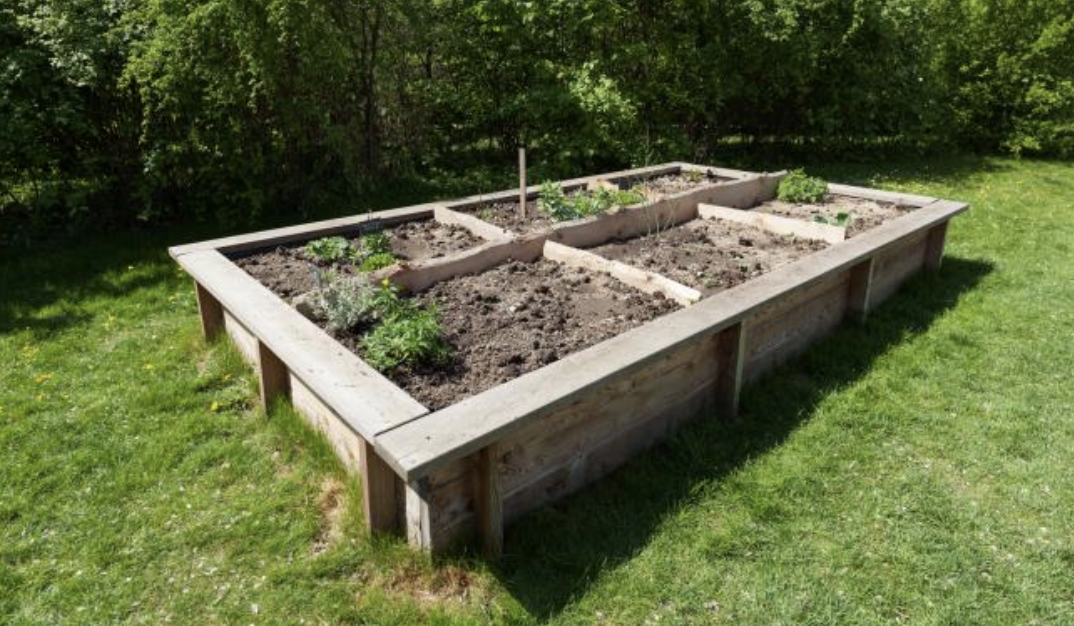
Henry supports the idea of keeping chickens both for meat and eggs as well as investing in the time to learn about technology like aquaponics or even hydroponics, which can both create comparatively large amounts of food in small spaces. Surprisingly, he doesn't advocate relying too much on hunting. "If you're out there looking for food and things are that bad, chances are hundreds and thousands of other people are doing the same thing." There are only so many deer and pheasants to go around. That's why in the process of increasing their food supplies, many preppers also teach themselves how they could grow more.

Prepping is just as much about creating a sustainable source of food as squirreling it away. Because the end of the world doesn't just last a week or month or even a year — it's forever. And we all have to eat to survive.


Hope you enjoyed the series,

e a lake


Friday, March 1, 2019

Margaret Atwood's Classic: "The Handmaid's Tale"

This is absolutely one of my all-time favorite novels, dystopian or otherwise. I was very, very interested to see how they would portray this in a mini-series. Very! (Note: I saw the movie back in the early 90s that starred Natasha Richardson... Loved It!).


Again, just like with The Man in the High Castle I spoke of last time, I know they have to edit some of the book content out and add action in spots where it didn't previously exist. Quite honestly, there are chapters and chapters of Offred's thoughts that had to go. The novel tended to be heavy with exposition.

But when things go off-book, I start to become concerned. When we start having episodes of flashbacks (they call them backstory) that tells me we're way off-book. At least with Game of Thrones, the series writers just added them like they actually existed in the original novel.

I knew near the end of season one I was going to have a problem with the off-book subject. I didn't, at that time, know there would be a season two. I don't remember it ever being mentioned that Offred's husband was still alive in the book. (Please correct me if I'm wrong). That was the moment I looked at my wife and said, "crap, they're going to make another season of this for us to sit through."

Now, that being said, I liked most of season two. I feel like they did a better job of adding onto the novel than a lot of these types of shows do. It's really not that bad and I will probably dabble in season three when it is released.

Characters: Loved Ann Dowd as Aunt Lydia (sorry to see her go). I thought Joseph Fiennes makes a believable Commander Waterford (my wife hated him, point proven). Alexis Bledel goes above and beyond in her portrayal of Ofglen. Oh, and Yvonne Strahovski as Serena Joy is spectacular.

Not a huge Elisabeth Moss fan (she's the MC - Offred). Don't know why. Just never felt she's had the part just right.

All in all, they've done a good job with this classic dystopian novel at Hulu. Like I said, I will certainly give season three a solid try. My interest has been piqued with the season two cliffhanger.

How about you? Thoughts? Please be sure to let me know. And, is there another one of these you'd like to know my thoughts on? I'll be happy to read and watch almost anything... for a while.


Until next time,

e a lake

Friday, February 22, 2019

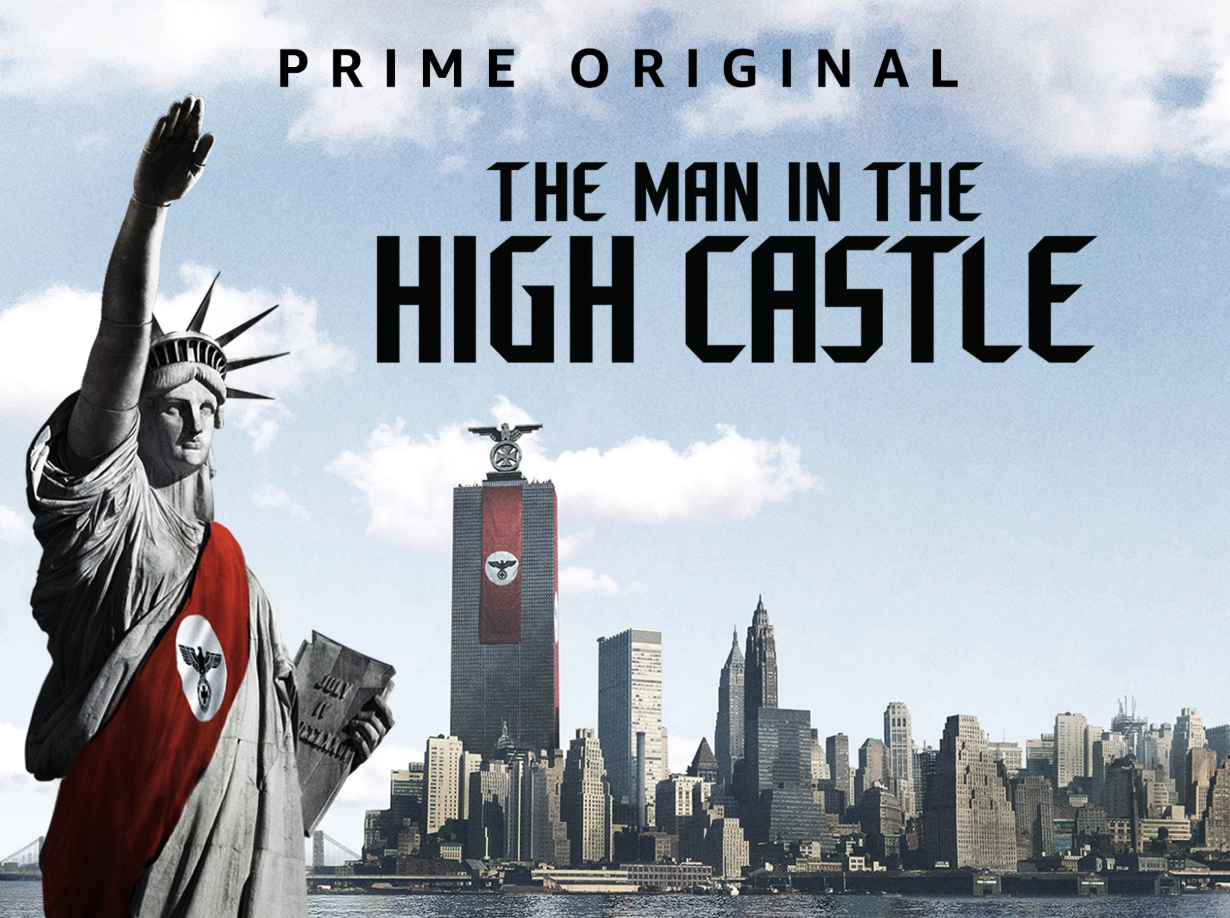
The Man in the High Castle - A Dystopian Tale

As you know, I love any and all things dystopian. So about three years ago I was excited to see Philip K. Dick's novel turned into a series on Amazon Prime.


Now, I understand that most novels do not translate perfectly to a "movie" script. I know that the writers of the show will take certain liberties here and there. And, for the most part, all was well in my world -- my reality.

Let me summarize the first three seasons for you with my brief humble opinions:

Season 1 - Great storyline, marginal acting and probably shot with a dark camera filter at all times. Too dark at times. I really loved several of the characters and the actors portraying them: John Smith, Director Tagomi, and Inspector Kido. The rest -- meh.

I loved every minute of season one right up to the very last scene. That's where my alternate reality was introduced to a second, parallel, alternate reality. WHA??????

Season 2 - I was lost most of the season. With events occurring in both realities sometimes I found it hard to figure out what I was watching. Great action between Smith and another Nazi officer towards the end, but the rest? Hard to stay as engaged as I was with season 1.

Season 3 - I've watched one episode thus far. Not sure I'll go much further.

How exactly Juliana Crane (Alexa Davalos - the MC in my mind) went from a mealy-mouthed frightened woman in season 1 to machine gun totting super-woman right at the beginning of season 3 added another mind-boggling reality for me. I was all for her at first; go, Juliana, go! Now, in season 3, nah.

Again, these are just my thoughts on the show. And it probably has something to do with taking a single book and stretching it further than its original content. Maybe.

Next time I'll do another popular series: Hulu's The Handmaid's Tale.


See you then,

e a lake

Wednesday, April 25, 2018

The Separation of the USA -- Left and Right

Unless you live in a cave -- and a very deep one at that -- you know that our two-party system in the United States isn't working so well right now. Heck, it hasn't been working well in a while.

This group hates Trump and Ryan; that group despises Pelosi and Obama. The Clintons are immoral. Nixon was a terrible crook.

The left is for the people, all the people. The right stands only for the rich, the uber-rich.

Blah, Blah, Blah, Blah!

There's a problem here, people. Want to know who has a worse approval rating than our current President? All of Congress, that's who.

And I haven't gotten to the worst part yet. The problem is deepening. Even though everyone in politics -- as well as the rest of us -- know there is a huge issue here, what are they doing? Are they playing nice and working on coming back to the table and seeing eye to eye?

Hell no! They're digging in their heels and widening the gap between themselves!

We are at an impasse, my friends. Plain and simple. The tipping point is nearing. And that means trouble for us in the United States, big trouble...for every one of us.

Here's what I think (and many agree with me). Our next Civil War will not be over resources, or states rights, or oppression. No, it will be Left vs. Right. Liberals vs. Conservatives. And this will be a war that will rip us apart.

I feel this way so strongly that my next series focuses on it. To discover more about those novels click here. I think you'll find it an interesting read.

I don't have a timeframe in mind and I pray such a war never comes. But as I watch the news each morning I can't help but see the writing on the wall. Forboding words that shake me to my core: This 200+ year experiment is no longer working!


That's all for now,


e a lake